Category: writing process (Page 9 of 18)

Writing By Hand

My writing has been hampered lately by a fear-based mindset. Every time I sit down at the computer to work, I look at my work-in-progress and worry that whatever I write next will be garbage. I’ll ruin the whole story.

This fear is crippling. I know rationally that I can always write a sentence and then change it if I don’t like it. But this doesn’t solve all the insecurities and fears that aren’t rational. It doesn’t address all my doubts.

I sit at the computer and doubt my judgment: Will I have the necessary skill to recognize a bad sentence, a bad plot line, a bad detail? What if my judgment is faulty? What if I write badly and can’t see it? Then I’ll have ruined my whole story. No one will like it. No one will read it. I’ll embarrass myself.

I hate these thoughts. I hate having these insecurities. But it’s very difficult to suppress them. I don’t think I’ll ever get rid of them. I’m looking for ways to overcome them, but I’m not sure what to do.

In the past, I’ve used 4thewords to help me get through these doldrums, but the more I used this online writing game, the more I felt like my stories became a means to an end. I wrote not because I wanted to spin a good yarn but because I wanted to earn points and level up in the game. This is an issue with gamification in general: extrinsic rewards supplant intrinsic ones. When I was using 4thewords to get my stories finished, I ended up thinking of my stories as vessels for earning points. What I wrote wasn’t important, it was just the amount that mattered. I needed enough words to defeat a bunch of monsters, not to tell a compelling story.

I stopped using 4thewords because I didn’t like that it was training my brain to write for points. But I can’t deny that it helped me get over a lot of my fears about the blank page. I’m sure it works very well for many writers, but for me, my brain was learning all the wrong lessons.

What I’d like to discover this time around is a way to get over my fears that doesn’t involve gamification or substituting extrinsic rewards for intrinsic ones.

(Side note: I know I probably need to work on figuring out why I have these fears in the first place and put effort into changing my mindset. I’ve tried addressing my mindset in the past, and while I’ve seen some progress in tamping down my perfectionism and imposter syndrome, I’ve not made enough progress to alleviate writer’s block entirely. One of the best strategies I’ve come across is to switch what I’m working on. I’m kinda doing that now, in fact… writing a blog post instead of working on a story. This old switcheroo is great for getting my fingers typing again, but it creates a problem when it comes to finishing things. If I’m always switching projects, I’m never finishing them. This strikes at the heart of the problem: I haven’t truly addressed my fears. Switching projects might help the initial block, but it doesn’t help my overall perfectionism and self-doubt.)

The only strategy I can think of at the moment is to leave my screen behind and switch to drafting on paper. I love writing by hand and do it everyday in my Writer’s Notebook, but when I’m working on an essay, newsletter, or fiction story, I tend to write on the computer. I can type much faster than I can handwrite. If the ideas are flowing quickly, my keyboard is the better tool for getting words down faster.

But the computer screen invites a kind of formality into the process. I don’t know why it does, it just does. I sit at the computer, stare at the screen, and feel like whatever words I type on the screen are THE words. They are weirdly hard to extricate from the story. I know deleting things on the computer is super easy. One strike of the keyboard and whole pages can be swept into nothingness. I know this, but yet my brain sees those words on the screen, existing with all the other words I’ve already written, and it starts to believe that those words are practically published, practically finished and ready for the reader to see.

Maybe I should blame blogging for this development in how my brain works. After all, I type the words into the text field on WordPress, and with one click of a button, they are published to the internet. How could my thinking not be affected after more than a decade of blogging, of composing words on the computer and expecting them to be published with one click?

But my Writer’s Notebook is different. In my WNB, I handwrite everything. I don’t show anyone my notebook. It’s not meant to be published. If I write something in the notebook that later becomes an essay or newsletter or story, I usually change things when I retype the handwritten words into the computer. A word here or there, adding things, cutting things, etc. The handwritten words are for me and me alone. Only when I type them up do I decide they might have merit for another reader.

Because of this habit, I know my brain associates handwriting with experimentation, privacy, and play. Typing is for “professional” stuff. Handwriting is for me. It’s where I go to enjoy myself. Just as typing up blog posts has trained my brain to associate typing with publishing, my WNB has trained my brain to associate handwriting with joy and relaxation.

What I need to rediscover is the intrinsic reward of writing a story just for the pleasure of writing a story. No more points or leveling up. No more typing on the computer always with an eye towards the “publish” button.

What if I told stories to myself, handwriting them on a yellow legal pad or in my Writer’s Notebook? What if I thought only about the fun and experimentation that comes with writing by hand? Will this free me from the pressure to be “good”? To escape the trap of perfectionism that always seems to creep up when I’m typing on the computer?

Whether this is a quick fix or a permanent solution, I can’t say. I do know that when I think about that yellow legal pad, when I imagine myself scribbling words onto it, I get excited. Handwriting means experimentation. Play. Joy. When I’m writing by hand, the pressure is off. Thinking about that yellow legal pad, about the movements of my fingers as the black ink streaks across the page, I suddenly want to start writing the next sentence of my story. I want to see where my hand will take me. The computer screen feels like a closed, sterile room. The handwritten page feels like a wild and winding path.

The Bamboo Curtain

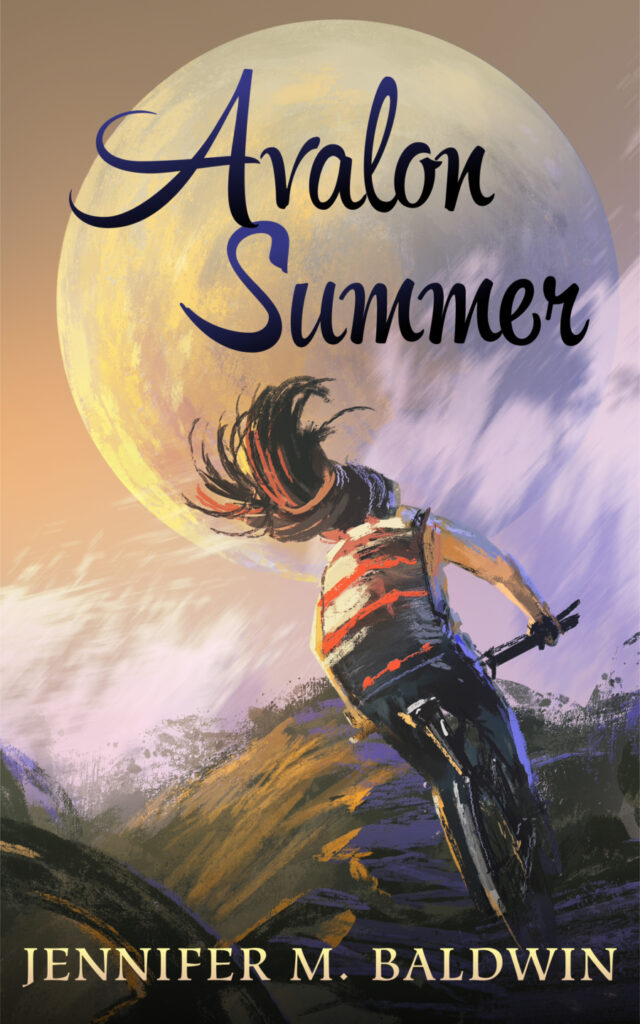
Today I finished another chapter in Avalon Summer. It’s called “The Clay Mines.”

Not sure about it yet. The novella itself is based a lot on my memories from childhood, and sometimes I’m just writing things as I remember them, not really thinking about plot or structure or conflict or tension or anything, just seeing everything in my mind’s eye and transcribing it on the page. The ending of “The Clay Mines” was like that. I was just remembering things and putting them in there, hoping that somehow my subconscious was making connections.

When I go back and reread my words tomorrow, maybe I’ll see things that don’t fit and I’ll cut, or maybe I’ll see a place to add more, but sometimes it’s hard to judge. Everything is hard to judge when it’s your own work. There’s the version in your head and the version on the page — and they don’t match up — but it’s hard to know if what you put on the page is trash, or if it’s just that artists can’t judge their own work.

I think it’s probably better — as the artist — not to judge at all. Just put it all out there and let the readers decide.  This is where enjoying the process — the crafting of the story — is more important than the finished product. Whether the “Clay Mines” chapter works or not is/should be an after-thought. I had fun writing it today. I had fun remembering and trying to picture everything clearly, and to my delight, I remembered a detail about my grandparents’ basement that I hadn’t thought of in years.

That memory alone was worth all the time I spent writing the chapter. Suddenly, with the memory of that detail, an entire vault of other memories opened up and came back to me. That experience is part of the reason I’m writing this book in the first place. I want to remember those forgotten details of the past and put them into some kind of coherent narrative, to lift them out of memory and bring them to the present. Today, I did that.

Music = Flow

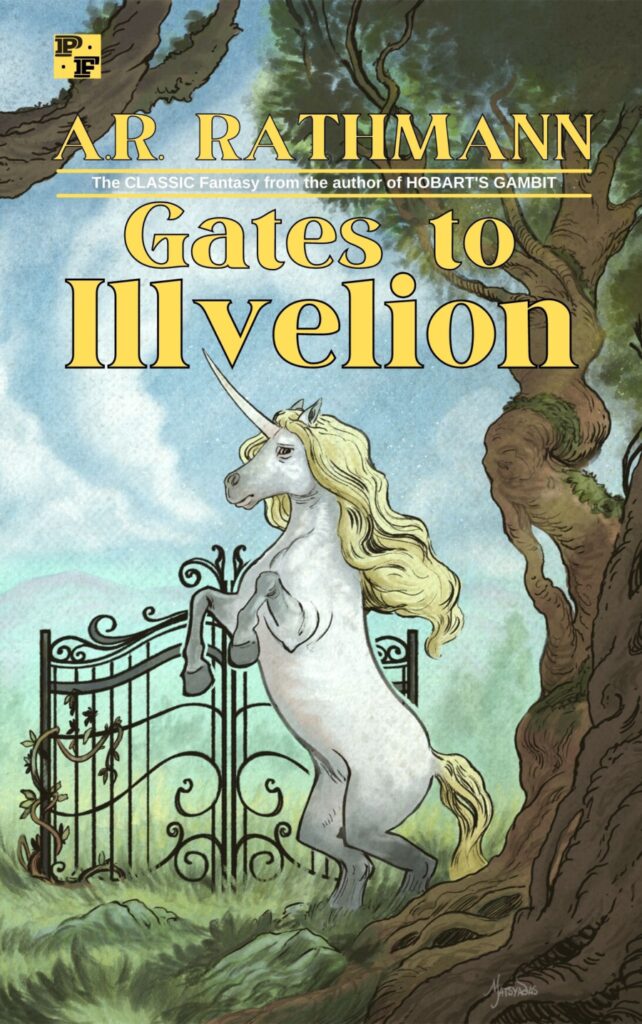
I’ve been writing a lot of words this week — including finishing Gates to Illvelion — and I’ve been listening to a lot more music lately. I don’t think this is a coincidence. Music has always been — and continues to be — a major source of inspiration for my writing.

When I don’t listen to enough music, my writing well runs dry. When I’m saturated in good music, then my cup overflows. So simple, but sometimes I forget it.

Drawing a Picture of Structure

I was experimenting the other day with drawing pictures of the structures of my two works-in-progress (Gates to Illvelion and Avalon Summer).

Avalon Summer was pretty easy. The drawing was like a bullseye target with my main character, Sarah, moving through each ring of the target until getting to the center. The novella is very much an interior journey for the characters. Each ring of the target is an experience or set of experiences that leads to insight, facing fears, internal change, etc. I could visualize what I was doing very clearly.

For Gates to Illvelion, however, my first attempt at drawing the structure was a mess. I had these venn diagram/concentric circles going around and then in the middle of it all I drew a “traditional” plot structure (the old linear up and down lines leading to a climax). Somehow I was trying to express the story’s circular nature as well as its linear progression. As a drawing, it was a mess.

Does that mean Gates to Illvelion is a mess too? I don’t think so.

I tried to draw the structure again.

This time, I drew two jagged lines, one on the left side of the page, one on the right. These lines weren’t slowly going up, though, they were going down to a point in the center. This point was the low-point for each of them, the characters of Gwenhivar and the Queen. They were on parallel but also crisscrossing journeys, and I realized that what I had drawn was a mirror image.

THAT is the structure of Gates to Illvelion. A mirror image. The young girl and the older woman are on mirror-like journeys, one going down into the depths and the other trying to find her way back to the surface. A much better image than my first attempt.

Why even do all this drawing anyway? What does this have to do with storytelling, with writing, etc.?

I guess I just wanted to have some fun. To see what my stories would look like visually instead of verbally. I suppose I also was hoping such drawings would help clarify things for me. What kind of stories I was telling, how my imagination should experience them. I don’t work from an outline (not anymore, anyway), so visualization is important. I need to see the movie unfolding, flickering into view from the darkness. But I also need to have some idea of the form my story is taking. This isn’t the same as an outline, but it is a way to “see” what I’m making. Outlines are too plot-focused for me. If I outline, then I get bored of the story when I actually sit down to write it.

But if I discover the story as I’m writing, the experience is thrilling and a lot of fun. No boredom.

However, at some point in the process, I need to have a feeling for the form the story is taking. I need to feel the shape of the story without necessarily knowing what will “happen next.”  I don’t think it would be useful to draw a picture of the structure too early in the process; that would be too much like making an outline.

But once the story is a living, breathing organism, then a picture can help. It can show me what kind of organism I’m dealing with. I still don’t know what will happen next in the plot, but I know what kind of story I’m telling, and that lets the movie images flicker more clearly through my mind so I can transcribe them onto the page.

Really Wanting It

I hadn’t written any fiction for several days — lack of time, lack of ideas, stress — but today, as part of my daily notebook writing, I started visualizing a future in which I made all my income through writing books. At first I just imagined a kind of ideal day: writing in the morning for several hours, doing publishing and marketing related stuff in the afternoon, reading books, taking a long walk, etc. But then I started to realize how my three hours of writing time in the morning could add up to some serious word count totals. Even if I struggled for the day and only managed 2,000 words in my three hours time, that would add up to hundreds of thousands of words if I stayed consistent and wrote six days a week for a whole year.

I was confronted — once again — with the reality that if I wanted to be a full-time author, I would need to commit to writing for several hours per day. Not anything exorbitant — not seven or eight hours — but simply two or three hours. An afternoon, perhaps. Or a couple of hours in the morning. Or at night after the kids are in bed. But I would need to be consistent. I would need to stay motivated.

I would need to really want it.

Yes, of course, I’d really wanted to be an author, from the time I was a kid, but what I was reminded of yesterday is that if I was going to be a full-time, making-money-from-my-books kind of author, I would have to write A LOT more books. A lot more. I would need to commit to those two or three hours per day.

Which means I would need to be desperate for it. Not just wanting it in that dreamy, wouldn’t-it-be-great sort of way, but in a visceral, my-kids’-lives-depend-on-it sort of way. Not that my kids’ lives depend on me writing 2,000 words per day. After all, I can always get a “regular” job (or go back to teaching… heh). But if I was serious about being full-time, I would need to write as if my kids’ lives depended on it.

What would I do if it meant my kids’ survival? I would sit my butt in that chair and write like my hair was on fire.

Maybe even then, maybe after ten or fifteen or twenty books I still wouldn’t be making a full-time (or part-time) income, but I would need to do it first — I would need to seriously try — to know if it could work. I would need to write with a kind of furious determination.

So after that little notebook reality check, I sat down at the computer and hammered out 1,500 words. It took me a little over an hour (and then I had to get dinner ready).

Can I keep this energy going? Can I sit for two hours every day and write with this same gusto?

If I want to make a living at this, I’ll have to. It’s as simple as that.

Reading Challenge Update:

Mostly Pachinko today, though I did read a few more essays from the Sarah Ruhl book. Even though Ruhl is writing about theater, I’m finding a lot to think about as a fiction writer. Good stuff about plot, structure, character, etc. Love the essay on Ovid and transformation! It speaks to the fantasy writer and fairy tale lover in me. Might write more about it for a future blog post or newsletter essay…

The Next Line

A Year of Writing Dangerously by Barbara Abercrombie was okay as far as these kinds of writerly books go. I bookmarked a bunch of quotes (usually from other writers whom Abercrombie herself quotes), but what I really liked were the writing exercises at the back.

Fifty-two exercises, presumably one for each week of the year. I’m a bit of a sucker for writing prompts since I started giving my students a prompt every day for their notebook time. I couldn’t possibly make up a writing prompt every day for my students, so I started borrowing (stealing?) them from other sources.

I am no longer teaching, but I’ve gotten into the habit of seeking out new prompts to steal. Sometimes I use them myself, other times I don’t. If I don’t like a prompt from a book or article, I just ignore it. But more often than not, even a prompt that doesn’t instantly thrill me can be fruitful. If I force myself to write something for a prompt — even one I don’t find particularly inspiring — I often end up writing something interesting, maybe even good.

This is evidence of the theory that parameters and boundaries lead to creativity. Total freedom doesn’t always lead to the most creative art (though sometimes it can… I’m not a big believer in absolutes when it comes to creativity, writing, making art, etc. Sometimes total freedom can lead to something wildly creative, and other times not. And sometimes parameters and boundaries are stifling and kill creativity. There are no absolutes).

Anyway, these prompts from the Abercrombie book are pretty good. Short, simple in their directions, but pretty wide in their application and execution.

I started with the first one: “What is your own metaphor for fear of writing that first line? Imagine a landscape or animal or weather or music or whatever springs to mind.”

I did modify a bit. Instead of “fear of writing that first line,” I changed it to “fear of writing that next line,” because for me, first lines are easy. Someone in a setting with a problem. Or something provocative. Or a question.

(Not a literal question, like a rhetorical question or something, but a line that raises a question, i.e.: “The dung heaps were always spouting poetry,” and then the reader is like, “Huh?” and they want to find out the answers, like how is it possible that dung heaps can even spout poetry, and then, furthermore, why would they spout poetry of all things? What kind of poetry? Is anyone listening to it? That sort of thing.)

Anyway, first lines are not my problem. It’s next lines. What comes next after that provocative statement or that someone in a setting with a problem. That’s where I struggle.

Because next lines mean you have to deliver. You have to answer the story questions in a satisfying way, in a way that makes readers oooh and aaah. That is ridiculously hard. And terrifying. All the promise of the first line and then you shit the bed. It’s my biggest weakness, this fear.

First lines are the open road, the horizon off in the distance. There’s the promise of adventure, of revelation, of greatness. But the line that comes after — the next line, always the next line — that’s like finding out the horizon you were heading toward is just one of those Looney Toons landscapes painted on the rock wall. It’s like finding out you’re Wile E. Coyote going splat.

All this time I think I know where I’m going, I’m excited for the journey, and then BLAM! I hit a wall. That feeling of promise, that endless horizon was all just a trick. I was really headed for an illusion, a vision of greatness that, in reality, was the side of a mountain. I’m worse than lost: I’m splattered like roadkill on the rock.

See, lost isn’t bad. Lost means you can find your way. The detour or digression could turn into a fun episode.

But the splat? That’s a total dead end. It’s embarrassment. I thought I knew what I was doing, but that next line is just waiting there to prove to myself and my audience that I suck. What happens when I write that next line and go splat? I slide down like a glob of jelly or a flattened pancake: defeated, ridiculous, a fool. We laugh at Wile E. Coyote, and that’s exactly what I fear. The embarrassment of failure.

Interestingly, the Coyote always runs full-throttle at that painted vista. Time after time after time. He never learns. It’s like he’s immune to embarrassment. Or has short-term memory loss. Either way, the splat doesn’t stop him. Every time, he’s right back at it, chasing the Road Runner down that endless road.

I’m not sure if this gives me comfort or not. But it’s a metaphor for something.

Reading Challenge Update:

Day 7, did more morning reading than evening/night reading today. Maybe this is the start of a trend. Reading at breakfast, before I start my journey downstairs to write and edit. In the past I’ve resisted morning reading because I feared that reading someone else’s work would interfere with ideas for my own work. But if I’m honest with myself, my mind is pretty blank in the morning. I’m often an empty vessel. So maybe morning reading is good: It’s a way to fill up the tank.

« Older posts Newer posts »

© 2026 Jennifer M. Baldwin

Theme by Anders NorenUp ↑