Category: writing process (Page 8 of 18)

500 Max

I’ve noticed these past few days, as I’ve tried to trust my writing process and get words done for my current work in progress, that after cycling back through the manuscript and adding new words and continuing the story, I can only manage a maximum of approximately 500 words before I stall out. Sometimes I only manage 300 or so, other times I get close to 600, but without fail, I get near the 500 mark and I feel my energy ebb.

When my mind starts to wander and I disengage from the story, I usually get up from my desk and walk around. If I’m diligent and sit back down after ten minutes, I usually can continue writing, following the same process again of cycling and adding and moving the story forward. But another 500 words later and my brain is melting again and I need to take a break.

It’s interesting that 500 words seems to be my max. I get close to that number and then my brain just nopes right out of the story. Why does that happen? Is there something about 500 words that breaks my concentration? I don’t watch the word count when I write either. I only know that when I feel that disconnect happening and then look at the word count, it’s hovering somewhere between 300-500 words.

Weird.

Keeping the Streak Alive

The title of this post is not referring to my blogging challenge. This is only my third (?) day of consecutive blogging, so it’s hardly a streak at this point.

The streak I’m referring to is my fiction writing streak. I’m now at 46 consecutive days of writing at least one sentence of fiction every day. Most days I write more than one sentence, but the one sentence bar is low enough that I can do it even on days (like today), where I can’t get to my fiction until the very end of the day and my brain is utter mush. Even in a state of utter mush, I can wrangle a few words together to make a sentence.

And thus the streak continues.

One thing I’ve discovered over the past several years is that I’m a creature of habit, and if I can keep a streak going and do a little bit of something every day, then I’m much more likely to be happy and feel successful. This is an idea taken from James Clear’s Atomic Habits, the idea that small, incremental habits can build up over time and lead to something greater. Even if I only write one sentence, I’m still keeping in touch with my work in progress. I’m still contributing something to the story. And like the proverbial snowball running down the hill, I can feel momentum building with each day.

So, today’s writing was limited. I managed about 84 words. But those 84 words are more than what I had yesterday. And they got me to connect with my story again and keep it fresh in mind. Now I can fall asleep thinking about it. And tomorrow, when I sit down to write again, I’ll have forward momentum. It’s a lot easier to keep the snowball rolling than to try and restart it every week or so. So I just keep rolling it a little further down the hill every day.

Keep rolling and keep the streak alive.

Notebook at the Dining Room Table

One thing I’ve noticed lately is that my focus during my writer’s notebook (WNB) time has been getting a bit scattered. I usually write in my WNB at my work desk in the mornings, and my computer is right nearby (it’s an L-shaped desk), so as I’ve started writing in the notebook, my brain will get the itch to check some email or internet-y thing, and before I know it, I’m toggling between the WNB and the computer.

Not a great move for what’s supposed to be analog, handwritten, pen-and-paper time. I really value the act of handwriting in my notebook. It uses a different part of my brain; it generates ideas differently than my computer typing does. I sometimes do those mind-map things in my WNB, or I draw charts, so using pen and paper instead of a word processor is suitable. But generally, I just like writing by hand and keeping all my stuff in a notebook.

And yet, when I write at my work desk, the computer is always siren-songing, trying to get me to click on something, and I have little power to resist. The WNB writing becomes hectic and scattered and often truncated.

As things would have it, this morning I wrote in my WNB at the dining room table. And guess what? I wrote a good two and a half pages without interruption. I got deeply immersed in the topic I was writing about, and I felt a lot calmer and more thoughtful afterward. The complete opposite of the scatterbrained, divided self I’ve become at the work desk.

Austin Kleon has talked about his analog and digital workspaces, and I guess I thought I had those two spaces in the two lengths of my L-shaped desk. One side housed my computer (digital workspace), the other a clear, open desk (analog). But they’re not two separate desks, and the reality is that the digital workspace has a kind of foggy aura that creeps from the computer and envelopes the entire desk, both sides of the L. I’m not kidding that the computer is a kind of singing siren. Even if I try to focus on my WNB, the screen is just over my shoulder, a huge shiny-eyed overlord, watching and willing me to turn my focus toward its all-consuming gaze.

At the dining room table, I’m free of the screen’s glare. I can actually immerse myself in the blank page without feeling like some omnipresence is watching me.

That’s the thing about these screens, isn’t it? Even when we’re not using them, when we’ve got them turned off or in sleep mode, or the cover on the iPad is closed, their very presence in our proximity makes us itchy and anxious. Better click on that browser just to see what’s going on… Better open that app just to check…

This behavior is antithetical to what I want from my WNB. Being at the dining room table — surrounded by windows to the outside where the bird feeders are active with songbirds and squirrels — and away from any digital device, means I can focus deeply on the WNB.

Maybe I need to do my notebook writing at the dining room table every morning.

Blogging Every Day? (Again?)

I don’t know if this is a worthwhile challenge for myself, but maybe I should try blogging every day again.

(To use the word “again” feels like a bit of a stretch. In late 2020/early 2021, I almost managed to blog every day… for a few weeks. But when March rolled around, I was back to sporadic posts and self-loathing. So, to say I’m doing this “again” feels misleading. Anyway. The point is, I’m gonna try blogging every day.)

The trouble with a challenge like this is that my life is filled with the ups and downs of raising young children, and there’s a reason Hollywood directors don’t like working with kids or animals. I can have the best intention of blogging every day, and then suddenly I’m taking care of three sick kids with a stomach bug, or someone’s broken their arm, or they’ve all declared war against each other over who gets to play with the big foam blocks.

I hate setting a challenge for myself and then not completing it. Story of my life, unfortunately.

But I’ve being doing a private challenge for the past several weeks, and that challenge is still going strong despite the hectic life I sometimes lead. Back in the beginning of March, I made a commitment to write at least one sentence of fiction every day (with Sundays being an optional day), and since March 6, I haven’t missed a single week. There are days when I can only write one sentence, but I still write it and count it as a day in my habit tracker

Maybe something similar can be applied to blogging. I might not write long, epic posts every day, but I’ll post something. I’ll write a quick missive about what I read or watched or listened to, or something I noticed the kids playing, or an update on how my writing is going. I don’t know. Kind of a “show your work” project.

I still want to write longer, more in-depth blog posts, but perhaps I can work on those slowly while also posting my shorter, day-to-day ones. A bit like how I write my newsletter.

I might fail this challenge, but I’m still gonna take it on. I’m nothing if not persistent, I guess.

Works in Progress April 2023

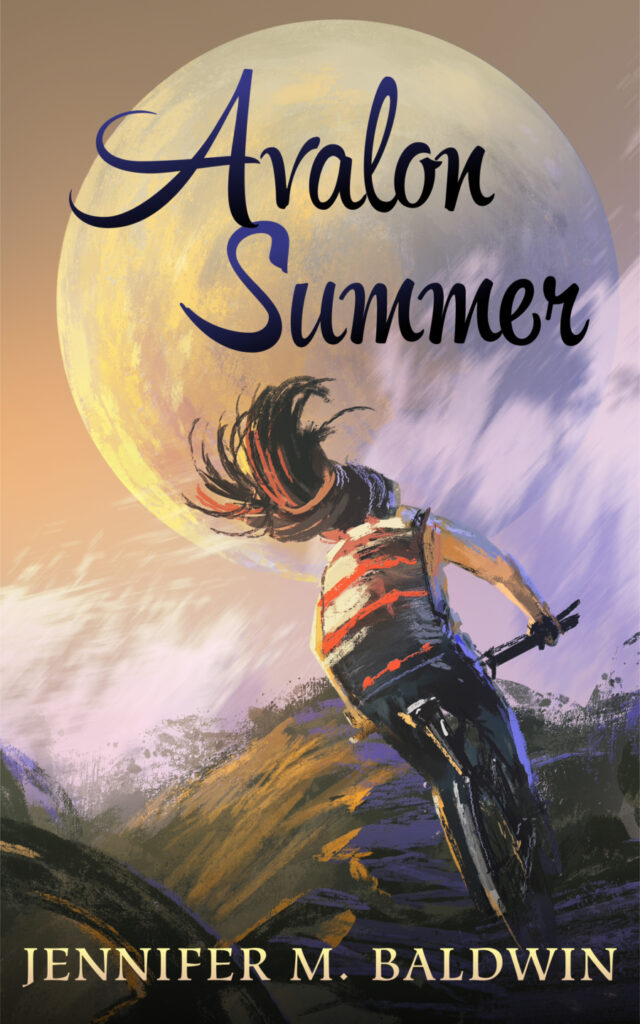
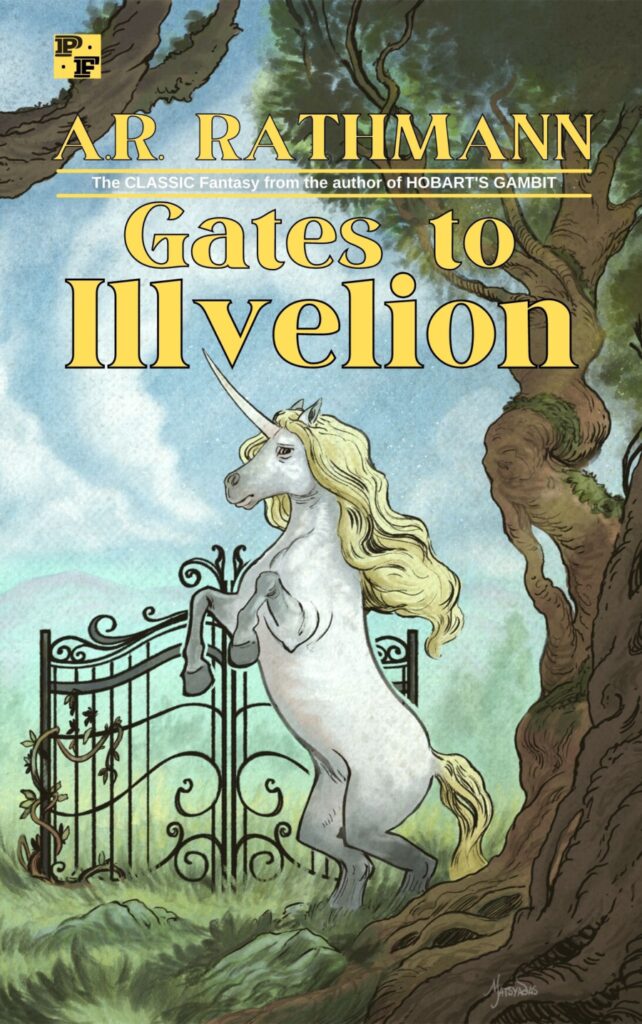
Since finishing both Avalon Summer and Gates to Illvelion, I haven’t been idle, though I do wish I was further along with my draft of the second Merlin book. I’ve written a few short stories that I’ve been sending out to different magazines, but so far, no luck.

And I’ve started drafting another novel, Norse City Limits, a story which I’ve had rolling around in my brain for almost ten years.

When I was in college, I took a class called “Icelandic Sagas,” and we read a whole bunch of them: Njal’s Saga, the Volsunga Saga, Grettir’s Saga, and a host of shorter sagas.

I always thought the style of the saga writers reminded me of the way screenwriters write screenplays: terse description, a focus on dialogue and action, and a point of view that resembles the “camera-eye-view” we get in a script. There’s no room for inner monologue; the thoughts and feelings of the characters are expressed in conversation and action. To my mind, these sagas worked a lot like the old film noir/hard-boiled movies from Hollywood’s Golden Age: fate and bad luck often played a huge role, society was controlled by a few rich and powerful networks that often manipulated the system to maintain power, and down-on-their-luck individuals had to find a way to survive in a hostile environment that answered only to money or force.

So Norse City Limits is my idea for melding Icelandic sagas with film noir. I know mixing hard-boiled fiction with fantasy stuff isn’t anything new (it’s Jim Butcher’s Dresden Files or Kevin Hearne’s Iron Druid, right?), but I really love film noir and I really love the Icelandic sagas and the Norse legends and mythology that they’re infused with, so I wanted to write my own version of this urban fantasy staple.

For Norse City Limits, my main character is not going to be a detective, but instead a “regular Joe” who is down on his luck and trapped in a bad situation. Much more of an Out of the Past situation than a Big Sleep one.

I’m hoping that Norse City, the fictional island metropolis that is cut off from the rest of the world, will serve as a setting for other books inspired by the sagas. Norse City Limits book 1 is partially based on Grettir’s Saga, but it’s not a retelling of that story. It’s more of a jumping-off point for an original tale of my own invention.

I’m not a very fast writer — partly because I need a lot of time for thinking and exploring, and what often looks like procrastinating is really my way of letting my brain ruminate on things — but, despite the way my brain works, I’m trying to write 2500 words per day (with Saturdays a little bit less, and no writing on Sundays). I know I have to work up to that amount, a bit like a runner working up to a 5k or a marathon, but I figure 2500 per day isn’t too high of a goal for now.

Solo Old School

A few years back, I first discovered Dungeon Crawl Classics RPG, and then I found my way into the old-school renaissance sub-genre of table-top gaming, and since then, I’ve become obsessed with games like Old School Essentials and Maze Rats, and adventure settings like Dolmenwood.

Unfortunately, I’ve had little opportunity to play any of these old school-inspired games. I’ve got a sporadic DCC RPG campaign going, but we’ve been meeting less and less frequently. And I’ve only ever DMed ONE session of old school D&D (Rules Cyclopedia version).

My gaming group is more interested in 5e, so that’s what we play. There’s nothing wrong with 5e. It’s not a bad system.

It’s just… not my favorite thing. It doesn’t sing to my soul the way the old school stuff does. The simplicity of the old school games (and old school-inspired games) coupled with the grittier, more classic sword and sorcery flavor excites me a lot more than the rules and flavor of 5e.

For many players, the fun of 5e is in character creation. The character-building process is a huge part of what they like about role-playing. They can choose from a host of different character options: different feats, different skills, different race and class combinations, different bonus actions and powers. For many players, the fun isn’t just playing at the table, it’s creating the character and studying the supplemental books, looking for cool stuff to add to that character.

As a mostly-DM, I’m less enamored with this focus on character creation, but even as a player, I’m not particularly interested in it. Making the character is one part of the fun, sure, but it’s not the main part. I would go so far as to say that playing the character (as in, playing “in character,” i.e.: talking like my PC, exploring my PC’s backstory, etc.) is not the main attraction for me.

What I love about RPGs is the exploration. I get to imagine myself inside a fantastical world. My character is my window into that world, but it’s the world that I’m interested in, not the “character build.”

Of course, I enjoy playing a character and growing an attachment to them, but I’m not interested in “playing a part,” like an actor. I’m interested in discovering a new world, of seeing what’s around the corner of a dark dungeon passage, or what’s hidden in the depths of an enchanted wood. The character’s growth happens when they explore the world. They change as they explore, not by leveling up and gaining new feats and skills.

The other thing I love about old-school RPGs is the aesthetic, which, I’ll admit, is my personal preference and nothing more.

And there’s nostalgia too. Old school RPGs take me back to Saturdays at Waldenbooks looking at all those Dragonlance covers on the shelves. They take me back to third grade when I discovered the Endless Quest books, to playing MERP and HeroQuest, to watching movies like Legend and Dragonslayer over and over and over again. The old school gaming stuff–even when it’s really weird and acid-y like Ultraviolet Grasslands–gives me the same vibes I used to get as a kid. I don’t think it’s the rules per se that do it; I think it’s the DIY spirit of the scene and the messy creativity.

But yeah, the rules are great too because they ARE simpler. The rules leave a lot of things open to the imagination of the DM and the players. I like that freedom.

I sometimes think of 5e as one of those adult coloring books with amazingly detailed and gorgeous pictures inside. They are  fun to color because at the end of the process, you have this amazing piece of art. But old school games are more like one of those “Child’s First Art Book” things, where on page one there’s an outline of a fishbowl and the directions say to draw a bunch of fish, but what the fish look like, how they’re shaped, what they’re doing, and what else is inside the fishbowl is entirely up to you. And each page is like that: a suggestion of what to draw, but everything else comes from your imagination. That’s what old school gaming feels like. Suggestions and outlines, but you get to draw the world.

So anyway, I wish I knew more people who wanted to play stuff like OSE and DCC RPG. When I’m feeling in the mood, I sometimes roll up a couple of characters and start sketching a simple dungeon and wilderness area, and then sorta run my own  adventure in my head. I know it sounds lame, but sometimes it’s all I can do to satisfy my desire to play old-school stuff. Sometimes I read modules and adventure settings and get ideas for games I want to run or even for stories I want to write. Even if I’m just flying solo, the old school stuff ends up feeding my imagination. I might not be able to play a campaign with a full table of people, but at least I can let the old school stuff inspire me.

« Older posts Newer posts »

© 2026 Jennifer M. Baldwin

Theme by Anders NorenUp ↑