Category: reading life (Page 1 of 12)

Reading is idling, an act of rebellion

I teach English as an act of rebellion. Against the deification of STEM. Against utilitarianism. Against consumerism. Against Capitalism.

It is not “useful” to read novels or poems or stories or even (most of the time) essays and other nonfiction:

“Reading is not profitable; it doesn’t teach you any transferable skills or offer any networking opportunities. On the contrary, it is an antisocial activity in the most concrete sense: To do it you have to be alone, or else pretend you’re alone by tuning out other people. Reading teaches you to be more interested in what’s going on inside your head than in the real world.”

(Adam Kirsch, “Reading Is a Vice”)

I am against those who want to sell you things and control your attention for money and power. Reading books is one of the ways we say, “I’m not going to optimize. I’m going to be slow and self-serving. I’m going to value my pleasure over your profit.”

Yes, there is a publishing market, but it’s more than just New York publishers or Amazon. Those of us who read books buy them used, we trade, we go to the library. We buy from small presses, independent presses, self-publishers. It’s a business, sure, but readers have a way of circumventing the business and consumerism if we want. We have all the old books to read, if we want. One could spend a lifetime only reading the old books.

There is homework–math problems, history notes, science reading–but then there is reading a chapter from a novel. There is reading a poem and writing one of your own. In the most narrow sense, if one does these at home as assigned by a teacher, then they are homework. But reading a novel is a pleasurable act. Reading poetry is leisure. We bristle when something is assigned; we suddenly don’t want to do it. But if we take a few moments to reconsider, we realize that reading is not work. Fiction, stories, language, poetry: these are a chance to be alone, to get inside one’s own head, to fight back against the world. All it takes is a shift in mindset to discover that this “homework” is really an idle pleasure.

Reading is idling, the opposite of work.

Which means, every chance a student has to read a book, she gets to break free from a work-obsessed, profit-obsessed, productivity-obsessed, speed-obsessed world.

I’m not interested in “21st century skills,” a buzz word for managers and corporations. I’m not in the classroom to teach students how to prompt machines. I’m there to read books, to share the stories and language I think are beautiful, good, and true. I’m there to point to things I like and let students discover and point to things they like. We spend our time reading books, talking about books, writing about and in response to books. I can’t think of a better act of rebellion against the machine-driven, inhumane world that would reduce our lives to money and influence.

Sometimes students don’t see the “point” in all this reading. But that’s because there really isn’t one. Not in the utilitarian sense. Not in a “How will this help me when I’m an engineer or a doctor?” sense. It won’t help you in engineering and doctoring. It will only make life better, make you escape the confines of defining yourself purely as “engineer” or “doctor,” make you pay attention to your own mind and what’s going on inside besides worrying about which rung of the ladder next needs to be climbed.

That can be an uncomfortable place to sit for some students. To do a thing for pleasure–in school!–is incomprehensible. Even we English teachers have to church up what we do with standards and data and metrics and all the rest of it.

But really, what we do–what I hope to do–is share a space with young people so they have time and materials to read. My little rebellion. My first principle of idling. My useless, antisocial, indulgent vice.

Mio, My Son

(This is part of my foray into the Dolmenwood Inspirational Media. For more, go HERE.)

I hope many of you have taken the chance to read Mio, My Son. I’m writing not so much a “review” or even a formal analysis as I’m writing my impressions, my ideas as they relate to the novel. I’m interested in the ways Mio, My Son inspires Dolmenwood, but I’m also interested in the book as part of the larger fabric of fantasy literature. What threads does it weave and carry forward through the tapestry? What can we take with us into our own writing and gaming? I’ll be writing about the book for an audience familiar with it. I do not hesitate to mention important plot details (so be warned). If you haven’t read it yet, I encourage you to do so. It’s a short text, but utterly lovely and memorable. Like a fairy tale.

The threads of trauma and neglect, of emotional abuse and loneliness, weave their way throughout Astrid Lindgren’s Mio, My Son. I can’t help thinking about the final page, the italicized lines: “He is in Farawayland, I tell you.” The insistence that all is well with Mio—not Andy, the boy on the bench in the park, the boy with foster parents who care little for him, who certainly do not give him any love—no, he is Mio, the King’s son, who lives in Farawayland. That one line—“I tell you”—is a desperate line, an urgent line. The narrator—who is Andy—needs us to believe that Mio is in Farawayland. He needs to believe it himself.

Because our main character Andy is a boy without true parents, who is dominated and unloved by “Aunt” Hulda and “Uncle” Olaf, who has only one friend—Ben, a good friend—but who lives a sad, second-hand life. Farawayland must be real and Andy must be Mio, or else the sorrow is too much to bear.

This is why the Sorrowbird must sing even amidst the King’s beautiful Garden of Roses. This is why the Sorrowbird continues its song even after the happy ending and Mio’s victory over Sir Kato: “I don’t know what he could have been singing about, now that all the captured children had come home. But I thought Sorrowbird would probably always have something to sing about.”

Sorrowbird always has something to sing about because sorrow will always be part of life.

He is in Farawayland, I tell you.

But somehow, we doubt. It would be wonderful if he was, but sorrow cannot be banished so easily.

The book’s mixture of joy and sorrow, happiness and pain, reunion and loss, are what make it deeper than it first appears. At first, it feels too perfect, too wish-fulfillment (though goodness knows, Andy deserves to have his wishes granted). Andy/Mio gets whisked away from all his problems by a genie in a bottle and reunited with his father, the King of Farawayland. Farawayland is perfect. His father loves him unconditionally. He makes a true friend in Pompoo (who reminds him so very much of Ben). He has a magical white horse named Miramis (who reminds him of the real horse, Charlie). Everywhere he goes and everything he does is beautiful and life-giving. The bread is literally called the Bread That Satisfies Hunger. The water is literally the Water That Quenches Thirst. There is no want in Farawayland. Only abundance.

But there is Sorrowbird singing in the trees. And soon we learn that all is not quite well in Farawayland. Nonno’s brothers have been taken, Totty’s sister has been taken, the Weaver’s daughter has been taken. Sir Kato has taken them. Evil, horrible Sir Kato. He is the blight upon Mio’s newfound life, upon the King’s realm. Even in a magical paradise, evil waits upon the borders, in the Outer Lands. Even in Farawayland, there is sorrow.

There is a distinct “fairy tale” style to Lindgren’s prose. Sentences are short, simple, and direct. Even the emotional register is straightforward. Mio was sad and neglected in his old life, but he is happy and fulfilled in his new. Miramis is perfect, Pompoo is perfect, the King is perfect.

But always along the edges of things, in certain moments, we are reminded that this perfect life is not without strangeness, mystery, and, of course, sorrow. Mio doesn’t know why the Sorrowbird’s song hurts him at first—and the pain goes away once his father comes and reaffirms his love for Mio—but we know why. We know that Andy is an emotionally abused little boy without true family and only one friend. A boy who feels the taunts of bullies and the ugliness of life. Even though Mio has joy upon coming to Farawayland, even he can’t help but remember the pain of what came before. So Sorrowbird must sing.

There are also elements of the uncanny—an eerie, otherwordliness—that creep into the story despite the cheerily idyllic life Mio now leads. That uncanniness is what Dolmenwood, the game, does so well.

My first real sense of “Dolmenwood” came in the chapter about the Well That Whispers at Night. When Mio meets Totty and his siblings, they are sitting beside a “fairy-tale” cottage and a stone well. Totty is cheerful, and his family is just as kind as all the other friends Mio meets in his father’s kingdom. But the Well is not for water. This comment from Totty immediately makes the Well mysterious. The uncanny is now introduced to what had been, just a few lines earlier, an idyllic scene.

“‘It’s the Well That Whispers at Night,’” says Totty.

A Well that Whispers. No water rests at the bottom but something else instead. Not even a someone else. It’s not a man or fairy or creature that whispers from the depths of the Well; it is the Well itself that whispers. The whispers send up their own whisperings.

I found myself shuddering a little at this moment, and yet it wasn’t meant to be scary or sinister. Still, there was something strange… that uncanniness creeping along the edges.

And the Well does whisper. Mio and the others lie down beside it and listen, and just as evening comes (for it must be evening before the Well begins to speak), they hear the whispers.

Tales are told from these whispers. Fairy tales.

I’m reminded by my British Literature students, as we study literature like Sir Gawain and the Green Knight and read a few Grimm’s tales, that fairy tales—not the modern Disney kind—are often strange and unsettling, even as they have heroic heroes and happy endings. They are weird.

So it is when the Well begins to tell its fairy tales, they are not frightening or bad—they are the very best tales, the most beautiful Mio has ever heard—but still. The moment is uncanny. There is magic here, and it feels unsettling. Why the Well whispers is never explained. How it came to be is never told. We only know that it whispers, and that one of its tales might be about Mio himself…

“‘Once upon a time there was a king’s son riding in the moonlight. He rode through the Forest of Moonbeams…’”

As soon as Mio hears this story, he can’t stop thinking about it, and this story is what sends him off, away from his father and his idyllic life. It’s almost as if the Well had put a spell upon him, as if the story both foretold his fate AND compelled him to make it true. After this whispering at the Well, Mio longs to find the Forest of Moonbeams, and from there his quest will begin.

So many of these seemingly simply things—Wells, Forests, Birds, Moonlight, Swords, Caves—are imbued with the uncanny, with an vitality that makes them special. Capitalizing them as proper nouns helps, but so do the details Lindgren includes. The description of the Dead Forest is one such instance: “We went on through the night and at last we came to a forest where there wasn’t a breath of wind and no little green leaves rustled because there wasn’t a single leaf left to rustle. There were only dead, black trunks of trees with gnarled, dead, black branches.”

The repetition here is simple but effective: “rustled,” “rustle,” “leaves,” “leaf” “dead, black trunks,” “dead, black branches.” The image is clear. It’s the “dead forest”: trees upon trees, but all of them dead. It’s a thick, tangled forest that Mio and Pompoo get lost in, but it’s the opposite of the verdant, leafy woods we’re familiar with. It’s unnatural. There might be a dead tree here and there in a woods or in our neighborhoods, but an entire forest made of “dead, black” trees is nearly impossible. The wrongness of it invites that uncanny feeling again.

I’m reminded of Tolkien’s point about how fairy-stories contain both magical elements as well as natural ones: “Faerie contains many things besides elves and fays, and beside dwarfs, witches, trolls, giants, or dragons: it holds the seas, the sun, the moon, the sky; and the earth, and all things that are in it: tree and bird, water and stone, wine and bread, and ourselves, mortal men, when we are enchanted” (“On Fairy-Stories,” 9).

Lindgren takes those natural elements and elevates them to the magical, but not by making the trees talk or the stones glow with fairy magic. Instead, she strips them to their very essence. The Forest of Moonbeams is just that: a forest filled with moonbeams. The Deepest Cave in the Blackest Mountain is exactly what its name implies. But what does Deepest really mean? What is the Blackest of Black Mountain? When Mio goes into the caves, when he loses Pompoo in the darkness, when he travels through impossibly winding paths toward the heart of the mountain, we can feel this intensity, the primacy and power of darkness. These primal elements are made manifest, and that primacy is what gives the story power.

I think about my own gaming and how I might be able to bring this primal and yet uncanny feeling to the worlds in which I play. Calling something the Deepest Cave can do something, but I’m not sure it can do everything that Lindgren does in her book.

Still, I am curious to see how inviting the Well that Whispers or the sword that cuts through stone into my Dolmenwood game might also invite more of the uncanny into the game world. A creepy whispering well (and maybe that well tells my players a story in which they are the main characters, and that story compels them to make things come true…), or a stretch of forest that is Dead like the Dead Forest (I’m thinking of the Nag-Lord’s realm), or a magic item that is the Sword That Cuts Through Stone, or a bird that always sings sorrowfully and the players want to find out why… These are all possible hooks and world-building elements that can give the Dolmenwood game a distinctly fairy-tale flavor. It doesn’t take quirky or whimsical elements to do it either. It’s as simple as Moonbeams, Darkness, Water, and Bread.

Even as the last page of the book takes us back to Andy on that lonely park bench, we too hope desperately that he might be in Farawayland. In his imagination—in every reader’s imagination— he can be Mio who fights Sir Kato, Mio who rescues the children, Mio who plays and laughs with his father the King in the Garden of Roses. This is the great work of fairy tale: the building of otherworlds. In these worlds, there are wells that whisper and horses that fly, friends who gather and bread that satisfies, quests to undertake and parents who love us.

Next month in my Year of Dolmenwood

I’ll be reading “Goblin Market” by Christina Rossetti.

Please join me in reading this strange and bewitching poem for March 2026. I just finished teaching it in my British Literature class, so I’m primed and ready to look more closely at the connections between the poem and the Dolmenwood RPG.

As part of my students’ work with the poem, I challenged them (for a bit of fun) to pretend they were co-writing a new song with Kate Bush. She wanted to do an adaptation of “Goblin Market,” so their assignment was to condense and transform the poem into a “Kate Bush version.” For inspiration, we watched many of her best videos (including “Wuthering Heights” of course), and my students knocked it out of the park. You better believe there was quite the chorus of “Come buy, come buy!” as they performed their songs (no interpretive dances, alas).

Year of Dolmenwood (2026)

Now that the Dolmenwood kickstarter has been fulfilled, and I am in possession of all my books and extras, I want to start running the game for family and friends.

But I don’t just want to run the game. I want to immerse myself in all things Dolmenwood. For my tastes, my aesthetic preferences, my preferred fantasy setting, and my general love of folkloric fantasy, I’ve decided to make my way through many of the inspirational media creator Gavin Norman lists in the Dolmenwood Player’s Book.

A kind of book/cinema club focused around Norman’s inspirations.

Some of the things listed in the Player’s Book are movies, TV, and books I’m intimately familiar with, but others are new to me. I’m not able to read/watch everything from the list in 2026, but I’m going to try and cover as much as I can.

Below is my tentative schedule. Feel free to read/watch along with me, and check here and on my newsletter for my reflections on each text. I’ll try to post something about the text at the end of each month. For example, I’ll post my thoughts on Mio, My Son at the end of February, “Goblin Market” at the end of March, etc.

I’d love for this to start a larger conversation about Dolmenwood RPG, folklore and fairy tale fantasy, and classic works of fantasy literature overall.

YEAR OF DOLMENWOOD SCHEDULE:

February: Mio, My Son (Astrid Lindgren)

March: “Goblin Market” (Christina Rossetti)

April: The Ladies of Grace Adieu and Other Stories (Susanna Clarke)

May: “Smith of Wooten Major” (J.R.R. Tolkien)

June: The King of Elfland’s Daughter (Lord Dunsany)

July: Lud-in-the-Mist (by Hope Mirrless)

August: Jonathan Strange and Mr. Norrell (Clarke)

September: The Fellowship of the Ring (part 1) (Tolkien)

October: Gormenghast (Mervyn Peake); Over the Garden Wall (dir. McHale)

November: The Green Knight (dir. Lowery); The Wicker Man (dir. Hardy)

December: Krabat (Otfried Preussler); Jonathan Strange and Mr. Norrell (BBC TV adaptation)

A Lesson in Dependency

This morning, as I made ready to drive into work, I tried opening my Hoopla app. Error messages ensued. I tried again. More errors. I tried a third time. Errors all the way down.

I grew frustrated. I considered deleting and redownloading the app, but the clock was ticking on my commute (I was still in the driveway, mucking about with the broken Hoopla app). I gave up and drove in while listening to NPR. The Marketplace Morning Report is not my jam, but I made do. S&P 500, NASDAQ blah-dee-blah, trade wars with India now. I let the financial news wash over me, but I was not happy.

I’ve been listening to a really good audiobook lately, and my kids have finally started to groove to A Horse and His Boy.

Alas.

So I tried again on the drive home from work. No more error messages, but clicking the login button does nothing. Bupkis. I click again. Nada. This time, I DO delete the app and redownload it, and still, there is no signing in. Everything seems ready and right for signing in, but the actual signing in, the clicking of the signing in button results in no response. Username and password looking lovely in their little login fields, but clicking of “LOGIN” not so lovely.

I check to see if others are having this problem. They are. Posting on X, Hoopla even apologized for technical difficulties around seven hours ago. It is a known issue.

And yet, I tried the login again. Tried typing in the password instead of letting my autofiller do it. Tried Googling again for answers.

This was futile, and I knew it would be, and yet I did it anyway.

Why did I do it? Why was I still trying to open Hoopla when I knew it was down, by the company’s own confession? Why was I sitting in my car in the parking lot at work for a good solid five or so minutes when I knew none of my efforts would bear fruit? Why did I try again when I got home, sitting for another five minutes in the garage, trying to login and relogin in, and delete the app and redownload the app, the same non-response as before, the same inoperability?

By my own unscientific count, I’d spent a good fifteen minutes trying to get Hoopla to work today, and no, fifteen minutes isn’t a super-long time, but it’s still time–time I could have spent listening to an Audible book or podcast, time I could have spent listening to music, time I could have spent in silence or thought or deep contemplation or simply driving on the road and getting to work/home a little faster. I wasted that time on trying to troubleshoot the stupid app instead of moving on with my life and doing something else.

And even more, I wasted energy and thought and emotion on this trivial thing. So what if Hoopla’s not working today? It’s not like I don’t have a lot of other ways to occupy my mind on the commute. It’s not like I don’t have other ways of listening to audiobooks. I might not love Marketplace Morning Report, but now I know just a little bit more about farmers learning how to adapt to climate change by using more eco-friendly agricultural practices. That ain’t nothing. I have a wealth, a king’s ransom worth of books and music and media of all sorts in my house and in my classroom, and even my radio is a wealth of music and ideas and information, and yet here I was spending time and energy and emotion on worrying about Hoopla.

Would I be sad if Hoopla disappeared? 100%. I love how many audio and ebooks I’ve discovered through the app.

But it’s not like I don’t have access to audiobooks and ebooks and regular book-books in other ways. I’m whining to myself about Hoopla when twenty years ago I would have had none of this plethora of literary media to choose from.

And this is why digital technology of every stripe–electronic technology really–is so frustrating. We come to rely upon it, and when it doesn’t work, when it goes down, when the power is cut off or the system crashes, we’re lost.

I mean, we’re not literally lost, but we feel lost. Bereft. We mash buttons and refresh pages and unplug and replug and do all the other things that are supposed to solve the problem, and as we do, our frustration grows at being cut off from the formerly-instantaneous pleasure machine.

Think about what happens when the internet goes out. When the power dies in a wind storm. When the app crashes.

We growl and grumble and spend fifteen precious minutes of our day trying to get back on, hook back up, return to the smooth seamlessness of our former digital lives.

Even now, I’m writing a ranty blog post about it. The Hoopla app’s crash has infected even this moment of my life.

It’s all so silly. I know I’m wasting time worrying about it. And yet my response to these things is always, “There must be a way to fix it!” As if I have any power in this situation.

I am powerless. And it is this powerlessness that is worst of all. It’s why I spent all that time in my respective driveways. I was trying to regain power. To fix the thing.

But I can’t fix the thing. Apps and electrical power grids are not things I can fix. Internet outages and system malfunctions are not things I am equipped to handle. I need experts. I need people in far-off places, with more expertise, with a desire to help, to help me.

The crashing of the Hoopla app is a lesson in my own dependency.

Maybe that’s why I raged against it all day. To be confronted with my helplessness. To face a thing I couldn’t fix.

Because I’m a person who wants to fix things, and when I can’t fix something, I rebel. The world is wrong. There must be a way. I’ll figure it out. Just give me a minute. I’ll solve this.

But I can’t solve the Hoopla app’s malfunction. I can’t solve so many problems of my modern, digital life. All these things are beyond my control. I must rely upon the kindness of strangers.

I’m sure they’ll fix it. Eventually.

But until then, I’ll have to accept my own vulnerability and imperfection. And recognize there are some things in this world I cannot fix.

Goal Update: October 2025

It’s been awhile. I’m going to try and be as upbeat as possible, but the results speak for themselves: I haven’t achieved most of my goals.

And yet! I’ve achieved some, and that ain’t nothing. Failing to success, right? Would I have achieved even these small things if I hadn’t set myself the goals?

Some may argue that yes, I would still have achieved these few things. And perhaps that’s true. Doing small actions every day does tend to add up to bigger things. My students who are writing for five minutes at the beginning of every class are seeing that happen in real-time. Their notebooks are filling up and they can’t quite believe it.

But there’s a part of me that thinks the simple act of articulating the goals helps me understand what my small actions are in service to. For my students, the daily writing added up to a class party (which we just had last week). For me, the daily/regular actions have added up to the completion of a couple of goals and slight progress on a few more. Again: that ain’t nothing.

What This All Means is precisely that it’s good to have some end goals, but it’s also good (better?) to keep plugging away. Achieving the goals isn’t the measurement; doing the small actions is. And not giving up. That’s important too.

Which is all to say that I’m writing this to self-assess, yes, but even more so, I’m writing this to remind myself that I must keep going. Even in a year’s time, I’ve accomplished things. Not much, but some.

And some is better than none.

Finish writing Norse City Limits (urban fantasy novel): I must admit that I’ve dropped the ball on this. I’m in that messy middle part in which I loathe every choice I’ve made thus far and feel utterly unsuited to the task of writing a novel.

I’ve taken a pause, honestly. Partly because I need to go back and reread and take better notes on what’s happened, but also partly because I think I need to do more reading/research. The Idea Well has run a bit dry. Problems of output are problems of input, and my Norse mythology/film noir input has been anemic these days (months?). I need to get back in touch with that part of myself.

The difficulty? I’ve started a few new projects and those are vying for my time. I feel the heat to work on them, whereas NCL has grown a bit cold.

I was worried about this, especially over the summer, when the novel was really stalled, but I’ve since made peace with it. This feels like how I work. I’m a multi-book reader, and I’m seeing how I’m really a multi-book writer too. It’s not the most efficient way of doing things, and maybe I need to retrain myself to write with white-lightning heat to finish a novel in a month or two or something, but for now, it seems that my process is more meandering.

It’s not like I haven’t been writing.

Maybe not as many words per week as I’d like, but I’m still writing. I’m finishing stories, I’m starting new stories, I’m writing Substack posts, and blog posts. I’m writing almost every day. Maybe not consumable words, but words that could turn into something later (I use my notebook/morning pages writing for ideas all the time).

I’m trying really hard to stop making demands on my Creative Voice. Instead of saying, “I must write this next chapter of __________,” I sit down at the computer, open a few documents (again, intuitively without deliberate thought), and I start cycling back through a story or start with a fresh page and new words, and I let the Creative Voice do its thing.

In fact, that’s precisely how I started this blog post. I let myself start writing what I felt like I needed to start writing, and an update on my writing goals is where Creative Voice led me.

It takes a great deal of trust in this process to operate like this, but I’m trying to trust it.

A bit like my insight on “inventing the process”: I need to stop prescribing the word count (or the work that “must” be done) and simply do what my Creative Voice wants to do. A story doesn’t have to be x-number of words long. I need to stop even thinking about stories as being “short,” “novella,” “novel,” etc. before I start writing them.

Maybe that’s the trouble with NCL? Maybe I committed to “a novel,” before I really had any idea what my Creative Voice wanted to do with this particular character in this particular world.

Well, anyway, I’m almost 50,000 words into the thing, so it must be something longer than a short story. What that thing is, though, I’m not sure yet. Maybe my idea that it must be 100,000 words long or whatever is getting in my way. Or maybe it’s shaping up to be 200k words or more… I certainly have enough story threads going and no idea how to weave them to a satisfying conclusion… It could end up being a door-stopper!

I’m somewhat tempted to throw a bunch of words out. Partly because I feel like certain choices bug me and I don’t like where they led me, but at the time, I didn’t have the courage to go back and redraft from those (seeming?) missteps. Do I have the courage now? Or is this just a way to avoid finishing?

I don’t think it’s a way to avoid finishing. I think it’s my intuition telling me that maybe I need to trust my gut and not keep putting lipstick on a pig.

Maybe I need to do that process reassessment after all and write with lightning heat…

What would that look like?

New Goal: Write an epic fantasy for middle grade readers/my kids (a novel about dragons): This came about because I wanted something for my kids to enjoy that went a little deeper than the dragon books they were bringing home from the library/Scholastic book fair.

I wanted them to have something like I had as a kid, a fantasy series that was epic and archetypal that also didn’t feel watered down. I’m a bit inspired by Katherine Rundell’s thoughts on children’s books and her novel The Explorer in particular, which we listened to as a family on audiobook.

This new dragon fantasy is partly why NCL is on hold.

As I’m typing all this out, I’m thinking I need to heed my own insights about writing one thing with lightning heat… I started this novel (working title: Shards of Stolen Breath) over the summer, and now it’s October and I’m only on Chapter 5. Maybe I need to write with white-heat and finish it as quickly as possible. My boy Thoreau always said, “Write while the heat’s in you.” Don’t let the fire die (hello, dragon pun, I see you).

What does it look like, for me, to write with white-heat?

Does it look like finishing a chapter a day? Write for thirty days, you got yourself thirty chapters. But what if Creative Voice doesn’t want to write a chapter a day? What if she wants to work on that other story that’s been brewing over here for a bit?

Okay, well, I just got done saying I wouldn’t boss my Creative Voice around, but I also wonder if Creative Voice would want to work on Shards every day if I actually, you know, thought about Shards every day. If I wrote about it in my morning pages, and took notes on it throughout the day, and dreamed about it at night.

I have a problem with daydreaming. I’m not doing it enough. I’m crowding out my thoughts with worries and a million other things. I need to schedule some daydream time.

Like, deliberately sit down (or go for a walk) and think about the story. Think about Shards.

I’ll admit that I’ve always been intrigued by guys like Moorcock (and Sanderson too) who can write something in a few days/months. Sanderson has spoken about this before. Write the novel as fast as you can, before the fire dies.

I like systems. I’m tempted to make this system for myself. The daydream about something, write it as quickly as possible, don’t let the fire die. Keep daydreaming so the fire stays stoked. (I swear I’m not writing all these dragon/fire puns on purpose.)

Isn’t it funny how writing all this out has led to insights? I hope they’re insights.

Finish writing Ysbaddaden and the Game of Chess (second book in Merlin series): Similar to NCL, this one is on hold. Perhaps it’ll be faster to redraft from word one on this as well. I’m tempted, mightily tempted to redraft from word one both NCL and Ysbaddaden.

Do I have the courage to try it? Enough of a fool?

Finish a short story set in my sword and sorcery world: Not yet.

Finish a short story about a mother who learns a terrible secret about her son: Not yet.

Finish a short story set in my Children of Valesh universe: Not yet.

New Goal: Finish a short story set in my magical music academy world: Not yet, but almost! I started a story called “Bronwyn Harper” a little while back and I’m getting close to finishing it. Between this story and Shards, I’ve been writing steadily. I also finished a random short story about a dragon egg and submitted that to Writers of the Future, so I need to remember that I haven’t been idle simply because I haven’t finished one of my big novels.

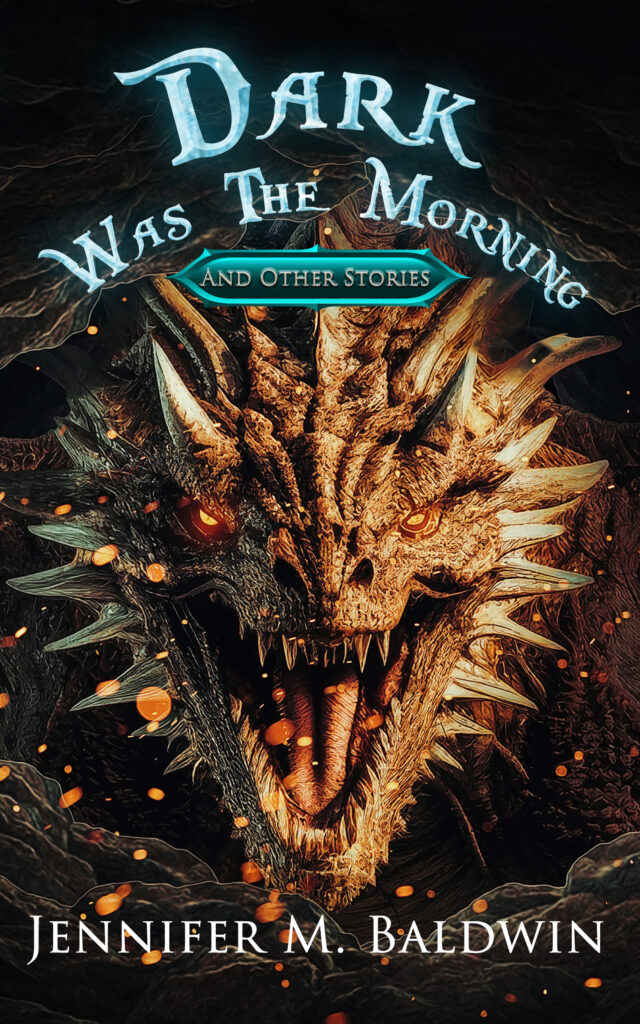
Publish my short story collection: Yes, I did it!

This was a big goal for me in 2025, and I’m happy to report that I met it. A bright spot for sure. It took me longer than I’d hoped, but the key thing is that I did it.

Finish a novella in my City of Ashes series: Not yet. Maybe never? This was a thing my Creative Writing students challenged me to do, but I’m not loving it. Time will tell.

Blog every day: I am not blogging every day, but I am still blogging. I like that this is a place I can continue to return to. I still aspire to blog every day, but it’s okay if I don’t.

Send out Substack newsletter every two weeks: Not yet, but I’m getting better. I’m prioritizing it a bit more. I’m looking through my notebook each week with an eye toward what can go on the Substack, and I’m loosening up my internal “rules” for what I should write about. The topics and essays are a little more wide-ranging, and I find this suits my personality and writing goals better.

Play more role-playing games with my kids, my husband, family, and friends: This is happening and I couldn’t be happier! I just played a one-on-one session of Caverns of Thracia with my eight-year-old son the other day, and it was glorious. And now that my Dolmenwood stuff has arrived, I’m ready to start up campaigns with family and friends. As a family, we’ve been playing Mausritter, Hero Kids, and DnD 5e.

I’m also playing in a regular Shadowdark game, and I’m running Thracia as an open table at a FLGS.

This has been an unqualified success.

Create some RPG modules for Norse City Limits and Merlin’s Last Magic: Not yet.

Make a “Saturday Morning” zine series and publish an issue every month: Not yet.

Make other zines: Not yet.

Read more books with my kids (Mrs. Frisby and the Rats of NIMH, Half-Magic, James and the Giant Peach, the Hobbit, the Silver Chair, Horse and His Boy, Magician’s Nephew, Last Battle, more Little House books, How to Train Your Dragon series, Harry Potter): I was doing this, and then we stalled, and now I’m ready to make this a priority again.

I think we need to force our kids a bit on these. They are sometimes reluctant to listen to these older books, but we think it’ll be good for them. First up, NIMH and A Horse and His Boy, then a retry with The Hobbit.

Start naalbinding again (finish the hat I started for my son and make another one for my other son): Ugh, not yet. I want to prioritize this. My son’s head will be too big if I don’t finish soon!

Practice my cartooning/comics drawing (for the zines): Hmm… a bit? Not much, though. Need to do more daily drawing.

Start a podcast: This is a new goal, but I have an idea I’m excited about and which I think my readers will really like. New goal for 2026 is to actually record the episodes and maybe even launch.

Write essays, poems, and fiction that will serve as models for my students next school year: Not much, and I’m wondering if I want to keep this as a goal. I’m not saying I never do this, but I don’t think I need to set it as a goal for myself. I can write things as needed and dictated by the students I have each year. But making it a personal goal feels like an unnecessary step. I’ll do the work if I need to as part of my day job; no need to “focus” on it here.

Bonus achievement: The dragon egg story I wrote on a whim and submitted to WotF. I was using a writing prompt, thinking it would just be an exercise, and then it turned into a whole story. Just goes to show that “practice” for writers can turn into real work (as is true for nearly all artists). Who knows if it’s any good, but I had fun writing it.

Input Update 7/23/2025

Reading: More Than Words by John Warner

Also reading: Fantasy: A Short History by Adam Roberts

Also, also reading: The Girl Who Drank the Moon by Kelly Barnhill

Listening to: When We Were Wizards podcast

Watching: Harry Potter and the Prisoner of Azkaban (with the kiddos)

I am also in the midst of reading a lot more books but they’ve somewhat cycled out of the daily rotation, whereas the three listed above are the current “in-progress” reads.

My backburner books are Alice’s Adventures in Wonderland (a book I’m planning to teach this Fall semester), A Midsummer Night’s Dream (see the Alice parenthetical), The House of Mirth (also a work book), and the Collected Fantasies Vol. 2 of Clark Ashton Smith (NOT a work book).

Sometimes I worry that I’m reading books for the sake of marking them off my list, reading as quickly and as relentlessly as I can. So far this summer I’ve finished twelve books. I enjoyed them all, but I can’t shake the nagging feeling that I didn’t absorb them as well as I could have.

I’m not sure of the remedy. I read so quickly because I have so many books I want to read. I try to “read at whim” as Alan Jacobs suggests, but sometimes that “whim” is dictated by what I need to read for work, or what feels like it could be useful for work. Or what the book club wants to read. Or what I feel I “need” to read because it’s been on the shelf for so long.

So maybe I don’t read at whim at all. Which might be why I feel that pressure. I am reading less at whim and more haphazardly, I guess. Whatever falls in my lap, whatever I need to read for work, whatever attracts me like a shiny object attracting a cat. And then the books I REALLY want to read (so I tell myself), end up going unread.

« Older posts

© 2026 Jennifer M. Baldwin

Theme by Anders NorenUp ↑