Page 41 of 51

Inspirations: Dungeon Crawl Classics RPG

20180803_181548

The Time: Free RPG Day 2017

The Place: a FLGS in Howell, Michigan

The What: Finding a copy of the 2017 Free RPG Day Dungeon Crawl Classics Quick Start Rules

The Result: Nothing.

I skimmed through the rules, liked the idea of The Funnel (where players create 0-level characters, like farmers and urchins and such, and then run them through an arduous dungeon and see who makes it out alive; livers get to become 1st level characters), and promptly moved on to other things.

I wasn’t really looking to run a new rpg. I had given up being a GM after some rocky experiences with a couple of game systems, my husband was taking over the GM role, we were looking at maybe playing some indie games or maybe even The One Ring RPG, but Dungeon Crawl Classics was just this little slim booklet with the cool cover.

But man, that cover. Every once in awhile, while working at my writing desk, that cover would peak through the stack of books surrounding it and I’d start dreaming. The strains of a Led Zeppelin mixed tape would waft through my brain. The feeling of forbidden adventure would beckon, as if I was ten-years-old again, hanging out at the library and gazing greedily at the AD&D 2nd edition books on the shelves, wishing my mom and dad would let me read them, wishing I could travel across Krynn, down into the bowels of a sorcerer’s underground fortress, to speak with dragons and steal magic swords. The cover of DCC’s rule book made me feel all that and more. It tempted me. Intrigued me.

But still, I didn’t go back to it. I was done GMing. We hadn’t role-played or even played board games in a long while. DCC was just a neat cover with some crazy rules inside. I wasn’t going to get caught up in it.

And then, about two months ago, I did. I grabbed the quick start rules again, read through them, loved the artwork, got somewhat inspired to Game Master an adventure (called “Judging” in DCC), and then told myself I was just flipping through the book to get ideas for Ysbaddaden and the Game of Chess. But in the midst of my inspiration-seeking idea-getting I found out I was kinda falling in love with this game. The art. Did I mention the art? It’s so freakin’ old school it makes my ten-year-old heart swoon. The game play (especially the magic) is all about wild, unexpected and chaotic shit happening; I loved the unpredictability, the anything-goes ethos. It WAS inspiring; I felt like my fiction had become too staid, too boxed in, and then DCC came along and said, “Go ahead, do something crazy. Nothing is off-limits. Fantasy doesn’t have to fit into neat boxes.” And now I’m ready to write almost anything, to let my imagination go wild, to write as if I’m a kid again, which is what DCC makes me feel: like a kid.

And kids play. Kids make up crazy shit. Kids aren’t bound by what’s expected or what’s “part of the genre.” Kids just know what feels fun, what excites them. DCC does that. It’s the rpg that speaks to my inner twelve-year-old.

I feel like games can be an awesome source of inspiration. They aren’t “literature” in the typical sense, but they do possess many of the features of narrative: setting, characters, conflict. With tabletop rpgs especially, players are encouraged to create a story together, to weave a narrative from the various numbers and statistics and dice rolls of the game. And with board games too, the imaginative elements are there for crafting stories. What else is the book Jumanji all about, after all? As soon as I finished rereading the DCC quick start rules this last time, I started writing a short story based on the zero-level funnel included in the book, “Portal Under the Stars.” Rpg fan fiction, basically. Something I have never done in my life, but DCC inspired me to do.

So yeah. I bought the core book. I’m reading it now and having all kinds of ideas. I haven’t GMed a game yet (planning on doing a modified version of Beyond the Silver Scream), but when I do, I hope it’s as fun and kick-ass as the game in my head. Regardless of whether I play the game or not, DCC still serves as fertile ground for my own storytelling. The feeling of the book — the vibe it gives off — is energizing. It fills me with the gusto I need to be creative.

Song by Jesse Teller (a TBRindr review)

35996063So much of fantasy literature these days has what’s called a “magic system,” a.k.a. the rules of how magic works in the story’s world. These rules are often revealed over the course of a novel/series, and the readers expect to have magic “explained” at some point. The idea is that if magic is systematic, then readers can more fully engage with the plot because they can piece together the information about the magic system — much like gathering and analyzing clues in a mystery novel — and then when it comes time for the characters to use their magic, the readers can anticipate, guess, or otherwise make predictions about how and what and when the magic gets used. Apparently, fantasy readers love, love, love them some magic systems. Me? I’m kinda sick of them. Not that I don’t love Sanderson and Stormlight and all the rest, but there seems to be this expectation by audiences that fantasy *must* have a magic system. I disagree.

I want magic to be, well, magical. I want it to be mysterious and hard to comprehend. I want it to bend and often break the “rules,” whether it’s the rules of physics or the rules of belief or the rules of what the characters thought might be possible. Magic systems have become, for me anyway, akin to mathematical equations: plug in these numbers to the formula and get back an answer. I’m cool with math in my sci-fi, but in my fantasy, I want something a bit more poetic.

Thankfully, the magic in Jesse Teller’s novel, Song, is not systematic or formulaic or anything resembling that. The magic in Song is the good old fashioned kind: levitation, energy blasts, dark ritual magic, third eyes, demon portals, teleportation, disguises, auras, etc., and most of the time, we’re not sure what the characters will do or what they’re capable of. The wizards and witches get to do crazy, powerful stuff, and it’s extremely cool with not a rule or system in sight. I’m sure Teller has his own internal rules for how his magic works, but we as the readers are left to ponder the power and danger of these magic-wielding characters. I like it.

I also like the dream-like way the book is written (at least in the first half; the second half becomes more “standard” fantasy action-adventure). Rayph Ivoryfist must gather a bunch of powerful fighters and mages to help him capture a slew of diabolical criminals and such (the criminals have all escaped from their prison and Rayph feels responsible for apprehending them). But as Rayph travels around, gathering companions and setting up his plan, the story feels like we’re in a dream, following Rayph from place to place, but never quite getting our bearings for where we are, who we are meeting, or what exactly is going on. I was reminded very much of the dream narrative in George MacDonald’s Phantastes. And at times, the writing in Song is lyrical and evocative in the same way that MacDonald’s prose can be. There are some strong images here, ones that I find myself recalling to mind quite often.

However, despite the crazy amounts of magic and the mixture of fantasy lyricism and grotesque horror, I found myself not very engaged in the story. I lay the fault at the fact that I couldn’t connect with any of the characters. Rayph, Konnon, and other key characters often feel very strong emotions, but I never really shared in their feelings. Their hearts would break, they would weep, they would laugh with joy, but half the time, I wasn’t quite sure *why* they were feeling these things. We get told about their feelings, but being told how someone is feeling is not the same as sharing in that feeling. This is where I disengaged with the story. The characters felt thin, a bit flat, especially the female characters. All of the little girls in the story were more symbols of innocence and purity as opposed to real, believable people. The sassy and mysterious barmaid is flirty and street-smart and all-around wonderful, but without any flaws or an inner life of her own; she existed simply to be worshiped by the male characters. Other females are either badass warriors/witches/demons, or ciphers. Because of the dream-like way the first half is written, things felt episodic, and since I never really felt connected with the characters, there was not much to pull me into the book. It isn’t a super-long novel, but it took me a long time to read. For many readers, this might not be a big deal — Song has plenty of action, plenty of gore, and some very cool set-pieces — but without the character connection, I couldn’t stay engaged.

Teller is a highly imaginative writer, and the world in which Song is set is varied and strange and vast. But because the characters never felt flesh and blood to me, I had a hard time making it through. I appreciated the way magic was used, I enjoyed the moments of grotesque fantasy-horror, but I just never felt the emotional connection.

3 stars

Big thank you to Jesse and Rebekah Teller for providing me a free copy of Song as part of TBRindr.

Side Projects: Untitled Sword and Sorcery book

swords-against-darkness

If I ever publish my book, I want a bitchin’ cover like this. (Hat tip: The Black Gate)

I’m really bad at doing one thing at a time. Even as a kid, I had multiple stories brewing in my notebooks, multiple role-playing games I was learning to play,  a stack of books I was reading all at the same time. There were moments when one thing would overwhelm all the others and I’d get obsessed with, say, finishing The Voyage of the Dawn Treader before reading anything else, but most of the time, I had multiple irons in multiple fires.

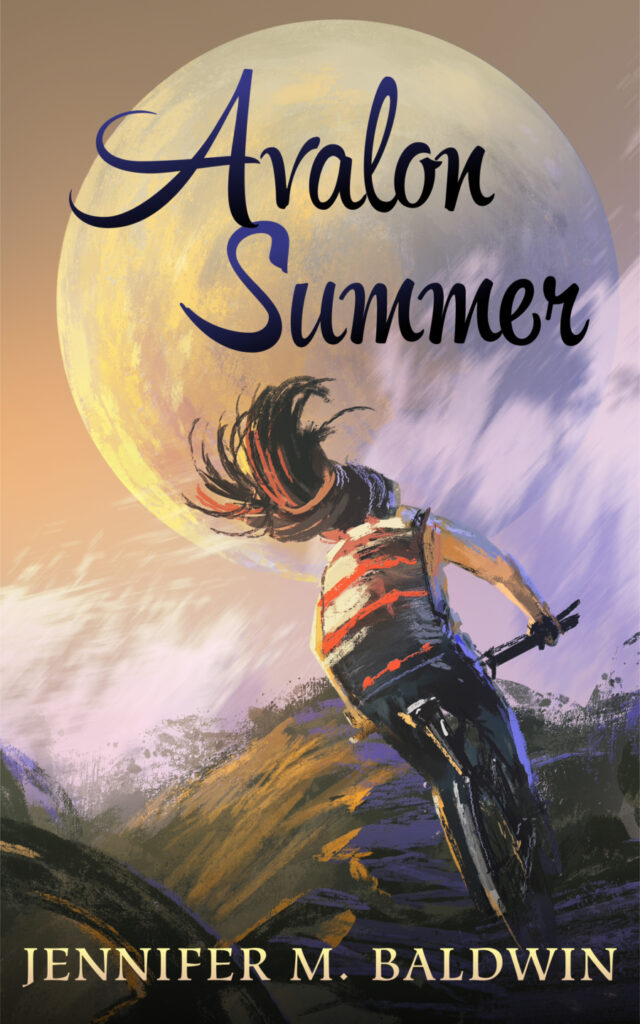
It’s no different now that I’m grown up. I still read several books at a time, I still noodle around with dozens of ideas in my notebooks, and I still work on multiple projects at the same time. Currently, I am working on the first draft of Ysbaddaden and the Game of Chess, but I’m also working on a draft of a fictional memoir called Avalon Summer, and just recently I’ve been delving more deeply into this Sword and Sorcery idea that sprung up earlier this winter.

At first I was thinking this S&S thing might be a series, but now I’m thinking I want to write one really solid, really gonzo book, and see how that goes. No trilogies or series. No marketing strategy. Just one book (and hopefully a good one).

I knew that I wanted a hook, something that would make my hero unique and cool and give him lots of opportunities for adventure. I knew that I loved certain things in my fantasy stories: dragons for sure, lots of magic, mystery and a sense of the numinous. I wanted a hero who would kick ass but also have some depth, some potential for growth and self-reflection. I know that in all of my writing, character and emotion are two areas where I need to improve, so I looked at this untitled S&S book as a sandbox where I could develop my skills. I liked the idea of writing a S&S novel but then write rounded, dynamic characters who experience emotional growth. A Conan story with lots of feels, basically.

So I’ve been noodling around. I created a central city for the characters to inhabit, a larger world for some crazy possible adventures (maybe in some short stories???), and a set of anchor characters who would drive the narrative. I’m not gonna lie: I’m excited about this book, about the characters, about the possibilities. But then, books/ideas are always exciting at the beginning, before any real writing has happened, before I’ve had a chance to screw anything up.

That’s always the trouble with having lots of projects going at once; as soon as one thing starts to disappoint, there’s always something else — something shinier, something new — that lures one away into greener pastures. I know that I can’t let this S&S thing overwhelm my job #1, which is finish my draft for Ysbaddaden, but at the same time, I’m having a lot of FUN noodling around in this new story-world, and I don’t want to give that up and go back to the sticky morass that is my Ysbaddaden draft.

And yet, the excitement of the side project often has a way of bleeding into the malaise of the main project. Even though I’ve not made huge progress on Ysbaddaden, I feel a sense of renewed confidence and energy when it comes to my writing. The side project creates a little retreat from the main work of writing, a kind of holiday — a mental health day, let’s say — that makes it a lot easier to go back to the tougher job of finishing that work in progress.

Now what, exactly, is my S&S novel about? What are the hooks and the magic system, and who are my characters, etc.? I’m not sure I’m ready to reveal that yet. There is a dragon, that much I’ll say. And I’m hoping to include several varied and interesting female characters (including a grandma! Fantasy needs more grandmas). But there’s a part of me that wants to keep this side project hidden, buried away in my notebooks, a hidden treasure where I can examine the rubies and spell-sewn hauberks all on my own. To open it up to the world would be to spoil some of the playground/sandbox fun. Right now, it’s my own private Idaho. I need it. I need the space and the freedom it provides. To bring it out, to rush its debut, would be to crush it and suck away the fun.

For now, it’s on the side. It’s my crazy something. It’s helping me get passionate about storytelling again. I guess that’s the beauty of having a restless imagination.

Kings of Paradise by Richard Nell (TBRindr review)

kingsparadiseAny book that can make me feel sympathy for a cannibalistic child-killer is obviously doing something profound. Richard Nell’s first book in his Ash and Sand series is nothing if not ambitious. Which I love. I love when writers try to actually say something with their work, when they try to find deeper truths. Exploring the inner workings of a broken sociopath while also delving into big questions like, “Why is the world unjust?” and “How are we called to respond to that injustice?” is a feat unto itself. Most writers satisfy their ambitions by trying to write a good plot with good characters; few writers seem up to the challenge of writing a great story, great characters, and powerful themes. Nell attempts that here, and I find that immensely exciting.

As soon as I read the first few chapters I knew that Kings of Paradise was trying to do more than just tell a ripping good story. It was trying to say something, to explore themes, to offer meaning, to stick to the bones in a way that had me immediately hooked. It also helps that Nell is a gifted writer with an amazing knack for creating characters that are dynamic, rounded, and utterly engaging. Whether it’s in the story line of the aforementioned sociopath, Ruka, or in the idealistic survivor Dala, or in the struggles and heartbreaks of the fundamentally-decent Kale, Nell’s characters feel fully alive, and I wanted to join them in their journeys of revenge, self-discovery, and enlightenment.

The world of Kings of Paradise is a neat little twist on the usual geography we residents of the Northern Hemisphere usually get in our fantasy settings. The Ascom, with its vaguely Norse-inspire names and culture is actually an Antarctic-type continent where South is colder than North. And the island kingdom where Kale lives and is prince is modeled on South East Asia (it’s a great economic power in the region, so maybe we are meant to see nods to the great Malacca trading empire of the Middle Ages). I’m not familiar with many fantasy epics that take place in a S.E. Asia-inspired setting, so for that alone, the book is intriguing.

What’s also intriguing is how Nell creates a matriarchal society in the Ascom, a place where a theocratic regime of women priestesses rules the land, and where families are known by their mothers’ names. One of the things I find most exciting about this world is the tension between the different religious beliefs: the old ways which seem to be more pantheistic and which favor traditional manly values like strength and feats of arms, versus the priestess-religion which focuses on one god (actually a goddess) and its values of law and orderliness. The dichotomy is set up between a might-makes-right/Chaos belief system and a follow-the-laws-and-conventions-of-society/Lawful system. Of course, as we discover, the matriarchal Lawful society is actually brimming with corruption, so we also get to explore themes related to dealing with a corrupt system and what to do when the laws and conventions of a society break down. This stuff: I LOVED.

And I also loved the journeys the characters went on — at least through the first 3/4 of the book. Ruka and Dala’s journeys were my favorite — not because they were good people, but actually despite their not-good-ness. They are each crusaders, fanatics in their own ways, and yet I was sympathetic to them and to their brokenness. Kale, despite being the nicest guy in the book, was actually my least favorite of the three major story lines. While the Ruka/Dala stories felt original and startling, the Kale story felt a little bit like a hodge-podge of other stories (a little Kaladin and Bridge Four at times; other times I felt like I was reading the “Cruel Tutelage of Pai Mei” sequence from Kill Bill vol. 2). The Kale story isn’t bad by any means, but the lessons he learns and the themes that get explored felt a bit trite, especially when contrasted with the stories set in the Ascom.

For three-quarters of the book, I was entranced. Unfortunately, that last quarter was a bit of a disappointment. All of the thematic questions raised earlier in the story seemed to get dropped by the end. One of the characters deals with his “goal” at about the 70% mark, and then from that point forward switches into a much more straight-forward villain. He goes from having a complicated and twisted motivation — something that I both wanted him to achieve and also not achieve at the same time — to having a simplistic “Let’s go conquer stuff” motivation that I found uninteresting. It moves the plot forward, I guess, but it’s not as rich as what was happening earlier in the book.

The other characters, as well, end up being less interesting when the final chapters roll along. I don’t want to spoil things, but one character gets dropped from the narrative almost entirely, and the other turns into something from a video game. Almost everyone goes from being multifaceted to being one-or-two-dimensional by the end.

EXCEPTION: One of the female characters does something so deliciously soap opera-y at the very end that I was immediately hooked to read the next book. So that’s a good thing. Ending on a crazy high note cliffhanger is always good. And what’s great about the gonzo ending is that even though it’s outrageous in some ways, it also makes some kind of crazy sense too. Now I’m fascinated to discover more about this person and her inner motivations and desires. Again, Nell has a way of hooking us with great characters who have hidden depths.

I know I am in the minority in finding these kinds of flaws in the book, but the last quarter of the story really left me disappointed, especially in comparison with what came before. The pacing was perfect up until about the 70% mark, but then during the last 30% new POVs kept getting introduced, events happened at a breakneck speed, and it felt very “off” compared with the earlier sections. All of this rushing about meant that the themes suffered, the characters grew flatter, and the promise of early greatness felt a bit dashed.

All of these criticisms aside, Kings of Paradise is a very good book. The writing, at a craft level, is stellar. Nell knows what he’s doing with language and it shows throughout. He also knows what he’s doing with character (for the most part), and I am excited to see where things go in the next book. I cannot say this is a book I will reread, but it is a book I will heartily recommend.

4.5 stars

Wearing a New (Old) Hat

Prior to trying (and sadly failing) to write novels for a living, I used to write about movies (and other pop culture stuff, like TV). I was, in common parlance, an amateur critic. I wrote critiques of Mad Men, Fritz Lang movies, and various other products of the Hollywood Dream Factory. I was a “reviewer,” you might say.

Well, I haven’t stopped watching old movies (or TV shows), and I haven’t stopped having opinions about stuff, but I have been reading more. And reading always and forever will be my first and most enduring love. I super-duper absolutely love old movies, but reading is where my heart has always lived. I dwelt in the land of literature first, and I shall dwell there longest and till the end of my days.

So I want to start reviewing again. To become Critic.

Since I’m not exactly writing my own fiction very quickly these days (*sigh*), at least I can offer my thoughts and feelings and critical assessments about other people’s fiction (*tee hee*).

I am part of The Weatherwax Report’s TBRindr, not as author (alas!) but as reviewer (hurray!). I am going to post more of my Goodreads reviews here on the blog. And I will do my best to have Deep Thoughts about fantasy, the growth of indie publishing, the meaning of genre, and what makes “good literature.” I shall also endeavor to write more about board games and role-playing (because).

I missed having a critical voice; I enjoy writing fiction (A LOT) (though I am very slow at it), but I also enjoying critiquing and commenting on fiction and art and all that jazz. So I’m donning my new (old) hat: Critic At Large. Hopefully, it (the hat) doesn’t slouch.

Ysbaddaden and the Game of Chess, Preview Chapter 2

For readers of my newsletter, I mentioned that I had written several thousand words of the Merlin half of this book and then decided to scrap it all and start over again. This is the first rewrite of that Merlin section. In some ways, I feel that it’s stronger than what I had before, but there are some moments from the earlier draft — and some ideas — that I kinda miss. The overall idea for the Merlin section is better now (I totally reconfigured how the chess game worked and what Merlin needed to do in order to play it), but there’s a part of me that misses some of the old stuff. I had some fun banter between characters, some imagery that I really loved, and some tense-y tension that was meant to set up future conflicts. It’s all gone now, lost inside a Scrivener file that will most likely never see the light of day…

Rewriting — or re-drafting from scratch — can be such a strange experience. The new stuff is often better, but there’s also a kind of grief that comes from losing the old stuff. Not all the old stuff: some of it is total crap. But the old stuff that *was* good, that had freshness and beauty. That’s the stuff that’s hard to let go. I am almost tempted to put the earlier draft side-by-side with this new draft, but then I worry that judgments and comparisons between the two will only stifle what I’m doing. I can’t look back. Not at this stage. At the drafting stage, looking back and comparing versions can often be debilitating for me. I start to question myself too much. At some point, I just have to trust my taste as a reader to discern which version is better and then go for it. At this point, the version below is the one I think is better. It’s the one I’m going with. For now.

Chapter 2: “Memories”

Merlin woke up and flexed his hand.

His staff was gone, his magic too. He was empty. Fumbling for his headphone, he put them on and pressed play. The music drowned his thoughts. He was sitting at the foot of a steep hill, and all around him swirled a sea of fog. He knew he was inside the chess game, but what he was supposed to do, how the game was supposed to work, he couldn’t fathom.

“Which is ridiculous,” he said to himself. He stood up and absentmindedly felt for the sack of unending on his belt. It was still there, but Merlin knew it wasn’t filled with much. Some books, some talismans that would be useless now that his magic was gone. No more thorns. Nothing.

Empty.

He felt the puncture marks under his arm, the tracks of his last-ditch effort to channel the magic of the elements. Scars that taunted him. He flexed his hand again and remembered the warmth of his oaken staff. He had his hands, his arms, all his limbs and senses. But he felt like a man who had lost a leg or an eye. He had his desire to do magic — he willed it with every fiber of his being — but his body would not comply. The elements had abandoned him. He was helpless. Powerless.

Merlin turned the volume up on his cassette player. There was no use standing around. He began the trudge up the hill.
There was no sign of his opponent, no sign of his army. He was inside a chess game, but Merlin had no king, no rooks, no pawns, nothing. He tried to remember the centuries ago when he had first crafted the game, a feat of magic that used all his skills of glamour, all his powers for crafting talismans. He couldn’t have done it without the power of his staff. He remembered doing it, but he couldn’t remember how it worked.

The crest of the hill approached. Merlin could see the sky widening above him, the fog drifting up into the clouds above. Atop the hill, spreading its branches out wide like the arms of a dozen waking giants, sat a great oak tree, brown and bright green and thick as a castle tower. The first thing Merlin noticed was the huge sword stuck in the trunk of the tree. The second thing he noticed was Taliesin sitting on a stone chair underneath it.

The bard smiled as Merlin approached. There was a stone table in front of him and another stone chair sitting empty across from him. On the table sat the chess board, gleaming gold and covered in one set of raven-black pieces. Taliesin’s pieces.
The black ivory jogged a memory. The raven pieces of Gwenddolau, the ancient lord who Merlin had made the chess game for all those centuries ago. The lord who had lost the game to Rhydderch the generous, and lost the Sword as well.
Merlin flicked off his cassette player and walked over to the bard. “You picked the wrong pieces,” he said.

Taliesin looked older than Merlin, but Merlin still thought of the man as the youth who had come to him looking for power and knowledge.

“I thought you’d never come,” Taliesin said.

“I wouldn’t miss it.”

“Take a seat so we can begin.” Taliesin nodded at the stone chair opposite. “I’ve given you white.”

“The young man’s pieces,” Merlin remembered. “Rhydderch’s.” He walked over to the chair and saw the leather pouch resting on it. He picked it up and opened it. Inside were pieces of white ivory. Merlin sat down and started to set his pieces on the golden board.

“I thought this was a living chess game,” said Taliesin.

“So did I.”

Taliesin raised an eyebrow. “But didn’t you make the game?”

“Yes, for Gwenddolau, a minor lord of old Britain. But I never played it. And he never spoke of it.”

“Embarrassed by his loss, perhaps?”

“Perhaps. He played the black, you know. Rhydderch defeated him with these very pieces.” Merlin placed his last piece on the board. The queen.

“I’ve been generous then. I hope you have worse luck.”

“Does luck have anything to do with it?”

Taliesin looked up at the Sword that hung over them. “A Sword to strike a god.”

“I guess you’ve already tried pulling it out,” Merlin replied.

Taliesin nodded. “Unsuccessfully.”

“Of course. And no spell would work?”

“None. A clever bit of magic, Merlin. Hiding it in the game, keeping it as a prize for the winner.”

“I was always good at magic.”

“And yet magic won’t help you here.” Taliesin gestured at the game board, the pieces arrayed on each side. “We must play, nothing more, nothing less.”

Merlin didn’t answer. Somehow he knew there was more to their game. A sudden reluctance — a fear — crept into his heart.

“White begins,” Taliesin said as he sat back in his chair. His body relaxed, his legs extended. He let his arms rest comfortably, one hand on his thigh, the other dangling by his side. His lips held a slight smile while his eyes stared unblinking at Merlin.

Merlin looked down at the board and waited. He vaguely knew which move to start with, but something held him back.

“Or you could quit this folly and rejoin the gods you once served,” Taliesin said. “It’s up to you.” The smile curled into a smirk.

Merlin met the bard’s gaze. “The gods who killed you?”

A darkness passed over Taliesin’s face. His smile vanished. “Make your move, Merlin.”

“No use over-thinking it, is there?” Merlin didn’t flinched. His fingers reached for a pawn, ready to move it forward two spaces. But as soon as his skin touched the ivory, everything around him flashed out of sight. The tree, the stone table, the golden board, the dark face of Taliesin — everything was gone.

Merlin was running. He was reaching up to grab the rough bark of a tree limb. He was laughing, smiling at the dog that ran at his heels. A mutt. Happy slobber hung from its lips and tongue. Eyes danced as they looked up at Merlin. Merlin was climbing the tree, the dog jumping to catch him, the green leaves brushing his skin, hiding the sun’s harsh glare. The oak tree. His first. The secret world of leaf and limb, the web of strong bark and ever-extending branches.

Merlin relived the memory even as he seemed to be watching it from afar: the first time he had climbed a tree. He looked down with his seven-year-old eyes, smiled at the joyful dog at the base of the tree, laughed with the drunkenness of freedom.

Merlin’s fingers jerked away from the ivory pawn. The memory vanished. The game piece rattled uneasily but didn’t topple. When it had stopped teetering, there was silence. It was still in its starting position.

Out of breath, Merlin looked up to see Taliesin staring at him. “I saw—“ Merlin began, but he couldn’t finish.

Taliesin leaned closer, curiosity replacing his former enmity. “Your eyes went white. Cloudy like a blind man’s.”

“I was gone. Back into the past.”

“A memory?”

“It was as real as you are. A moment from my childhood.”

Taliesin sat back again, the smile returning. “Curious. But it’s still your move.”

Merlin realized he had not actually moved the pawn. But when he went to pick it up again, he flinched. It had been a pleasant memory — one of the best memories of his life, long-buried but strong — but there was an intensity to such a memory, he wasn’t sure he wanted to relive it again.

“Move, Merlin.”

He had no choice. He looked up and saw the Sword of Rhydderch hanging over him, taunting him. He picked up the pawn again and pushed it forward two squares.

Nothing happened. No memory, no oak tree, no dancing dog.

“You haven’t played in awhile, have you?” Taliesin asked.

“Does it show?”

“I was hoping for more of a challenge. I’ve been waiting a long time for this moment.”

“Student against master?”

“Something like that, yes.”

Merlin flexed his hand. Still empty. Still useless without the oaken staff to hold. “What are you waiting for? Finish me and end my desperate quest.”

But now Taliesin hesitated. His hand hung above the pieces on the board, unsure of what would happen should skin touch ivory.
Merlin hated the hesitation and the silence. He suddenly couldn’t help but hate the man sitting across from him. There was too much to forgive. “Should we get it out of the way now? While you’re pondering your opening move?”

Taliesin stopped and scowled. “What’s that supposed to mean?”

“The conversation where you explain what in all the various hells is happening. Where you tell me why you’re alive and why you’re serving the old gods. The story of how we ended up here, with me on one side and you on the other. The Cath Palug, the half-dwarf, the Thirteen Treasures. All of it.”

“Oh, Merlin.” Taliesin laid his hands in his lap. “I wasn’t sure I recognized you. No beard. No hair even. So much younger than I remembered. And yet your arrogance is unmistakable.”

“I’m arrogant because I want to know the truth?”

“Because you think you deserve it. As if knowing the why means you can control this situation.”

“I don’t want control, Taliesin. I want to understand. We shouldn’t even be on opposite sides.”

“You’re right. You should be working with me to resurrect Manawydan. You should be making the sacrifices by my side to bring back Rhiannon. You should be opening the gateway yourself to welcome Gwyn ap Nudd to the land of the living. And yet you sit there and strive to win the Sword that can wound our masters. You are the traitor, Merlin. Not me. And that is all there is to tell.” A spell of flame — forged by rage — sprang to Merlin’s lips. But there was no power inside him to call forth the flame, no friendship to help the flame hear him. The spell died even before it had been born.

“Make your move,” Merlin said.

Taliesin picked up his knight and his eyes turned black. His body froze. Merlin watched as he entered some kind of trance.
And then in a moment the trance was over. Taliesin’s hand had moved the knight. His arm was shaking as he pulled it back across the board.

“A memory?” said Merlin.

Taliesin nodded.

“A good one?”

No answer. But the bard’s body was no longer relaxed. He didn’t lean back in his chair; instead, he leaned forward, elbows on the stone table, eyes fixed upon the board.

“Well, at least we’re starting to figure out the magic of the game,” said Merlin brightly. Taliesin’s unease gave him confidence.

“Your move, Merlin.”

“Not even a hint of what you saw?” Merlin looked over the board and wondered whether to move another pawn or one of his own knights.

“Just play the game.”

“I thought I was. Did you see a memory from your childhood? I wonder if that’s how it works. The game tries to distract us with memories from our past.”

“Are you trying to distract me now?” Taliesin growled. “It won’t work.”

Merlin’s hand hovered over his knight. “Not at all. Just filling the silence with some chatter. Maybe you can play a tune when it’s my turn. Something pleasant. Or else, maybe I’ll put my headphones back on.” He held up the portable cassette player.

Taliesin raised an eyebrow.

“Haven’t gotten out much since you’ve been back? I can understand. It must be busy work trying to plan out the destruction of your homeland.”

“You have very little understanding, Merlin. Neither I nor the ones I serve seek to destroy Britain. We simply want to restore it.”

“To a hellish nightmare of chaos and unrestrained, unrelenting power? Somehow I doubt the people of Britain would welcome that restoration.”

“I don’t care about the people of Britain.”

“Spoken like a true servant of the old ones.”

“Just make your move.”

Merlin resisted the aggressive move with his knight. Instead he moved another pawn.

Pain seared his mind. Red flaming eyes flashed in a torch-lit darkness. Screams. A woman crying out. Then a baby’s tortured squeals, and the heavy breathless panting of a woman after labor. The flaming eyes flashed once more, then darkness, and orange shadows on the wall. A hovel, an earthen house, a bed of musty straw. A gentle hand across the baby’s cheek, a warm kiss, and then the softness of a breast.

Merlin blinked and then returned to the stone table and the game. He found himself holding his breath.

“And will you tell me what memory came this time?” said Taliesin. He had a cruel look of satisfaction on his face.

Merlin managed to breath again, heaving in two gulps of air. “No,” he said through dry lips.

How could he speak of such things to Taliesin? How could he ever explain? How was it even possible that he should see and relive such a memory?

Merlin couldn’t explain. All he knew was that he did not want to touch that pawn again. The power of that memory was too much. Too deep.

Merlin looked down at the board. The pieces were all in their squares, each space on the board was ordered and measured. But what the game contained could not be measured. It was not orderly or even logical. It contained the faded, messy, inscrutableness of memory — memory brought to vivid life. The game was life. Merlin’s life — and Taliesin’s — brought back from the depths of forgetfulness and time. To relive these moments, even for a second, was almost too excruciating to contemplate.
Merlin looked at the game, heart pounding, and realized what it would cost him to play.

He was not sure he wanted to pay such a price.

« Older posts Newer posts »

© 2026 Jennifer M. Baldwin

Theme by Anders NorenUp ↑