Author: JennyDetroit (Page 46 of 51)

“Treasures Three” Part 1 (NaNo2015)

Folks want what they don’t have. That’s the way of things, and no mistake. Allow me to wax poetical for a slight moment when I say, “Desire is the strongest tonic in the world and in all the other worlds of the infinitesimal universe.” That’s my feeling anyway. Nobody never asked me ‘bout it, but I know it just the same. Desire. Strong stuff.

Continue reading

NaNo 2015: It’s Happening

Each day this November, I will post the words I write for NaNo here on the blog. Unedited. Pure and unvarnished. My NaNo “novel” will take shape before your very eyes, out in the open for all to see.

My “novel” is not a novel this year. As I mentioned, I’m rebelling and writing a collection of unconnected short stories (plus a novella). And each day, I will post what I write so others can see how these stories take shape. No editing. Very little planning. I’m letting it all hang out.

This is probably a crazy plan, but I’m hoping the added pressure of posting my NaNo writing to the blog will help me stay focused and disciplined. That’s the plan anyway.

My first round of NaNo writing will be posted by the end of the day (she said with a fierce glint of hope in her eye).

NaNo 2015 Planning: Stumbling Around

Am I Supposed to “Pants” This?

I don’t have a lot of experience writing short stories. Am I supposed to outline them before I start writing? Do I plan? What’s the procedure here?

Over the long course of writing Thirteen Treasures, I’ve discovered that I work better as a “Plotter.” If nothing else, when the plot is outlined, I know what I need to write when I sit down at the computer every morning. Even if I only manage to eek out a few hundred words, I’m confident that I’m on the right track. When I used to work without a detailed outline, I’d sit down and have no clue what to do or what to write next. I almost always ended up with endings that were ridiculous and unsatisfying.

But short stories feel different to me. Maybe it’s because I have Ray Bradbury whispering in my head to write from my subconscious dreamland and let the deep-seeded obsessions of my childhood be my guide, but writing a short story from a detailed outline feels like overkill, as if the weight of the outline will crush the delicacy of the story. Or maybe that’s hogwash. I don’t know; I’m new at this.

Title First, Story Later

So I’m gonna start with my titles and hope that story ideas follow on their heels.

Story #1: “Lightning in the Black Bottle”

Story #2: “The Treasures Three” (this one is going to be in the same universe as my Merlin’s Last Magic serial)

Story #3: “Song Child”

Story #4: “Things” (yeah, I’m getting real creative here…)

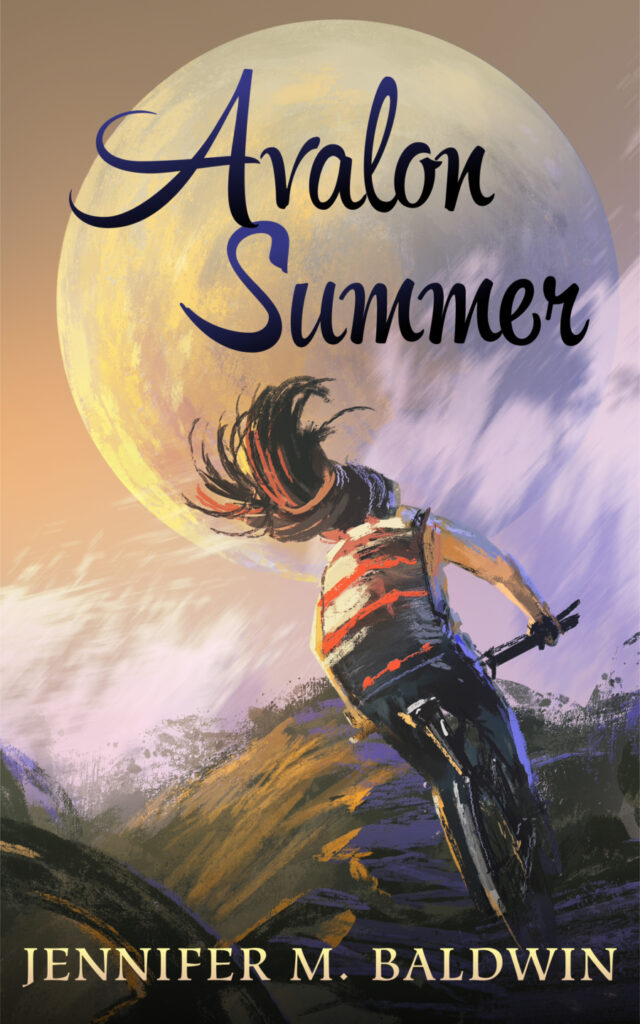
Novella Title: Avalon Summer

“Where do you get your ideas?”

I’ve been thinking about Avalon Summer and the story I want to tell for almost ten years. It’s part memoir, part fantasy, and it began life as an R.E.M. song. More specifically, two songs, which came out when I was eleven, and which always makes me think of summers at my grandmother’s and the melancholy that comes with growing up.

“Nightswimming” and “Find the River” have become  almost mystical songs for me at this point, telling the story and the mood of a time in my life that is at once real and unreal, actual and imagined, something that happened and something I dreamed would happen, the two  sides — memoir and fantasy — swirling together so completely that it’s hard to tease any of the threads apart. “Nightswimming” is about the past, about remembering; “Find the River” is about the end of something, of the river flowing, of the march of time — the bitter-sweetness that comes from searching. It’s hard to describe the effect these songs have on me, but perhaps the best way to describe it is to write the story. After all, “story” is what we create when we can’t explain. Stories are how we communicate the elusive ideas.

It’s pretty obvious from the description of my Merlin serial that I’m interested in Arthurian legends, and it’s an interest that began when I was a kid. Rosemary Sutcliff’s books about King Arthur were transformational, and much of my childhood was spent playing “knights” (i.e.: running around my grandmother’s four acres with wooden swords, pretending trees were dragons).

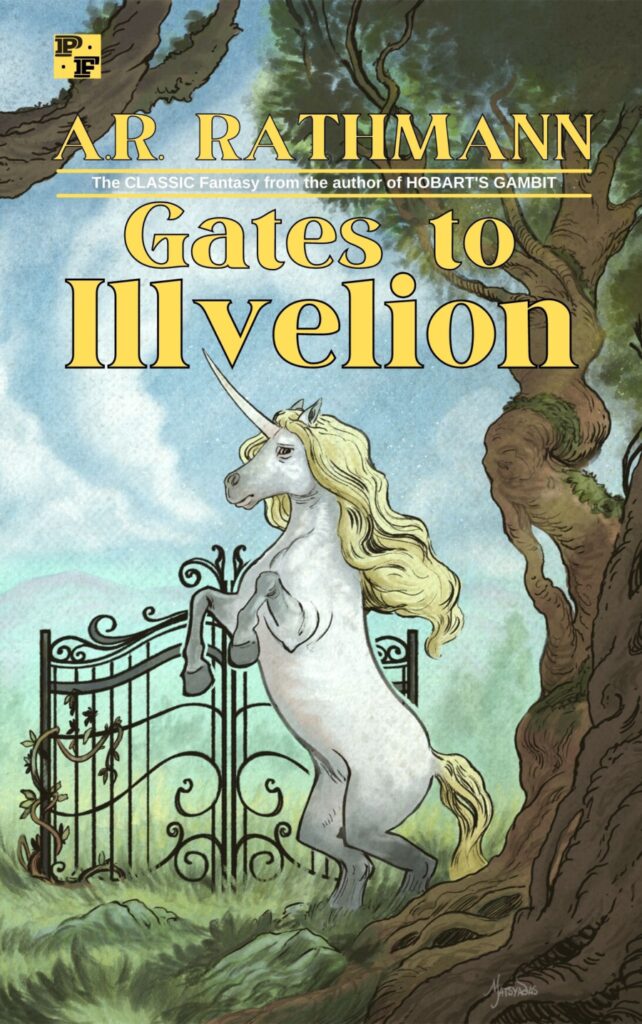
I know that Avalon Summer has to have a forest in it. There must also be an evening spent eating Chinese food and playing the Dark Tower board game. At some point, an iron-wrought gate must figure in. And a bookstore. These are my ideas, but I’m not sure yet how they hang together, how I thread them into a tale.

More to come, I guess…

The Rebellion Will Be Blogged

I asked my students this morning if they knew what day it was.

“October 1st!” (Yes, obviously. It’s written on the board.)

“Thursday!” (Thank you, Miss Wisenheimer in the back of class.)

“The feast day of St. Therese of Lisieux!” (It’s a Catholic school.)

Finally, one perceptive student:

“One month till Nano?”

Yes, one month until NaNoWriMo starts. A time for planning. A time for anticipation. A time for making grand plans about all the writing I’m going to do as soon as midnight hits on November 1st.

And then, of course, November 1st comes and goes and I barely eek out 100 words because… FILL IN THE BLANK (a. the Noodle has a terrible cold, b. *I* have a terrible cold, c. November 1st falls on my grocery-shopping day and I have to make dinner and grade a stack of papers and clean the house because my in-laws are coming over and the cats peed all over the laundry room floor, d. All of the above).

Or November comes and I start writing my brilliant novel and I’m hitting those word count goals — BAM, BAM, BAM! — and the world is my oyster and life is just grand. Until November 10th, at which point I HATE my novel and the words are dripping out like a tiny leak in the faucet and the world has ceased being my oyster and is only my half-eaten can of pickled herring that expired in 2008.

And so the cycle continues: Every October, I’m gearing up with fevered excitement for NaNo, and by December 1st, I’m crying into my stale beer.

So this year, I’m going to try something different. I’m going to join the rebellion. I’m going to be a NaNo Rebel.

And I’m going to do it all — unfiltered, unedited, unburdened by shame or regret — right here on my website. Every single one of my 50,000 words will be written here, on the blog, as I’m composing them, straight from my brain to you, the readers. No edits. No skipped days. Guaranteed, every day, for thirty days, I will write some fiction on this blog. (I can’t believe I’m promising this…)

“But what makes that rebellious?” (you might ask)

“After all” (you say), “blogging a novel is still writing one, and per the rules of NaNo, it still counts.”

But that’s just it. I’m not going to be writing a novel.

Noveling during November hasn’t worked for me. I’m tossing aside the task of writing a novel.

I’m taking on a challenge I’ve never really taken on before. I’m doing something for which I have had no practice and very little skill. I’m doing something that is (for me) slightly bonkers.

I’m going to write short stories. Four, to be precise.

And a novella. Because that’s what’s itching inside my brain.

All completely disconnected from each other. No shared universe. No shared characters. Each one separate.

Rebellion.

For the next 31 days, I’ll share my ideas and outlines and some world-building for these different stories, and then, on November 1st, I’ll begin writing.

Each day, new words. Five different stories (or maybe more). One month. All in real-time.

I’m pretty sure this is madness. But I’m doing it anyway. Stay tuned.

Loving Fantasy Literature

Sometimes it starts with the cover of a book. The colors, the creatures, the young hero swinging a sword. There’s a promise of adventure, of something strange, of hidden worlds that await just behind a tree trunk or a closet door or a looking-glass. There’s a promise that our mundane, everyday world is not the only one out there, that there are worlds upon worlds waiting to be discovered. These places might not be anything more than an illustrated cover or words on a page — but they are as real as any world we inhabit.

Sometimes it starts with a title. The lyrical, whimsical, powerful, magical. Things both earthy and ancient. Things that are imagined and things that are dreamed. Cauldrons and dragons and kings and gardens and cities and seas. Sometimes the titles are enough; we don’t even need to read the book to experience the fantasy. Example: The Last Unicorn. This is a world and a story and a feeling already contained in a title. It is its own fantasy, one that I imagined even before I read the one inside the covers. The Black Cauldron — there is an entire myth contained in that one phrase. A darkness and an oldness. The story which goes with it is partly of my own imagination; I wrote the story in my head long before I read the story on the page.

Sometimes it’s the experience of searching the shelves — the bookstore, the library, my own bookshelves — and seeing the spines glimmer like jewels in a dwarf hoard, and knowing that each is a key that will unlock another door to distant worlds. It’s also the warmness, the giddiness which comes with knowing that I’m not alone. That others have wanted the same adventures and the same escapes from ordinary reality. That there are people out there who also love to imagine and create and tell stories about monsters and heroes and faeries and gods.

I can’t quite explain the effect a fantasy story has on me. The mediocre ones satisfy my need for swords and magic. They scratch the itch I have for high adventure and monsters. But the great ones make the world — our own world — something brighter, something more alive than it was before. And they make me want to live more fully. They infuse the real world with some of the magic of their imagined worlds. I think Tolkien wrote about this in his essay “On Fairy Stories.” That the talking trees of Faerie somehow make our real trees more beautiful. And the really great stories — the ones that I think about for days after, the ones that transform my imagination — they feel like they’ve come straight from the Realm of Story itself, the origin of all great tales, so that when I read them, I am connected in some way to that larger place. And it is this connection that makes me want to write my own fantasy stories. I want to tie my own tales into this Realm of Story, to join my fantasies with these eternal ones.

I guess this all sounds ridiculous to those who don’t love fantasy literature. Maybe it is. But to those of us who love the realm of fantastical fiction, to those of us who yearn for an escape to Faerie, I bet this doesn’t sound strange at all. It starts with a sword or a monster or a piece of magic. A book cover. A title. It starts when we open that jewel-covered book for the first time. And if we’re open to it, if we’re lucky, if we’re ready for the adventure, the journey through the fantastical changes us. Like magic.

The Things That Shaped Me: The Prydain Chronicles by Lloyd Alexander

lloydalexanderIf you asked ten-year-old me to rank her favorite fantasy series, I would definitely have put the Chronicles of Narnia at the top. But a very close second would have been the Prydain Chronicles. Not as well-known or iconic as the Narnia series, the Prydain series nevertheless felt as exciting, magical, and original as Narnia, especially for me, a kid who obsessed over knights, dragons, magic, and all things fantasy. The names, the mythology, the magic, the creatures — the Welsh-ness of Prydain made it feel different, a little bit stranger and therefore more wondrous than the typical English-y fantasy. I would later discover just how much Arthurian legend originated in the Welsh tradition, but as a kid, the weird names and Welsh flavor of the Prydain Chronicles made them seem exotic compared to the fantasy and medieval legends I normally read.

Of course, the real beauty of the Prydain Chronicles is in the story and characters. I LOVED Eilonwy and Taran. I LOVED Fluedder Flam. I LOVED the relationship between Taran and Coll, and wonderful Dalben, and yes, even (sometimes annoying) Gurgi. Each of the five books had a unique story that introduced unique and amazing characters. And the villains were creepy and truly dangerous. This was a world in which bad things can and do happen, in which characters can and do die. It was a fantasy world filled with menace and evil in a way the Narnia stories (and even The Hobbit) never were. I must have read and re-read the series at least half a dozen times when I was younger. And I’ve reread them since, as an adult, and still find them to be charming. This, to me, is the mark of a great storyteller.

Looking back on the series now, I’m most fascinated by book 4, Taran Wanderer. As a kid, it wasn’t my favorite. It didn’t have a strong, scary villain. Its quest wasn’t magical enough. It was just Taran going around learning crafts and meeting with ordinary people, trying to find his heritage. Where were the battles? Where was the epic struggle between good and evil? And yet, as an adult, I realize now how bold it was to make the fourth book in this action-adventure fantasy series into a somber, quiet quest for identity and maturity. Now, when I reread the books, I get so much out of Taran Wanderer. It’s a story that continues to resonate.

Is it any wonder that the book I’m writing now is based on Welsh mythology? Is it any wonder that my imagination is steeped in the world of Gwydion and the Black Cauldron and the kingdom of Llyr? It’s funny to me that the Prydain Chronicles don’t seem very well-known, and yet when I mention them to fellow readers, I find so many people who also grew up reading about Taran and Fluedder and Eilonwy and Doli and Henwen and all the rest. Why the series is not more well-known is a mystery. It’s kind of unbelievable that we haven’t gotten a live-action movie franchise out of them (the less said about the animated Disney movie the better). But then, would we be able to trust a movie studio to do justice to the darker elements, to the themes of humility and sacrifice, to the subtleties of Taran’s journey from pig-keeper to high king? I’m not sure what a studio would do with a book like Taran Wanderer. Probably add a lot of unnecessary action sequences.

One of the things I’m most looking forward to as a parent, is the day I get to introduce my children to The Book of Three. Hopefully, it will stir their imagination as much as it did mine. Two decades after I first read the series, it still stirs my imagination.

« Older posts Newer posts »

© 2026 Jennifer M. Baldwin

Theme by Anders NorenUp ↑