Category: writing process (Page 2 of 18)

Goal Update: October 2025

It’s been awhile. I’m going to try and be as upbeat as possible, but the results speak for themselves: I haven’t achieved most of my goals.

And yet! I’ve achieved some, and that ain’t nothing. Failing to success, right? Would I have achieved even these small things if I hadn’t set myself the goals?

Some may argue that yes, I would still have achieved these few things. And perhaps that’s true. Doing small actions every day does tend to add up to bigger things. My students who are writing for five minutes at the beginning of every class are seeing that happen in real-time. Their notebooks are filling up and they can’t quite believe it.

But there’s a part of me that thinks the simple act of articulating the goals helps me understand what my small actions are in service to. For my students, the daily writing added up to a class party (which we just had last week). For me, the daily/regular actions have added up to the completion of a couple of goals and slight progress on a few more. Again: that ain’t nothing.

What This All Means is precisely that it’s good to have some end goals, but it’s also good (better?) to keep plugging away. Achieving the goals isn’t the measurement; doing the small actions is. And not giving up. That’s important too.

Which is all to say that I’m writing this to self-assess, yes, but even more so, I’m writing this to remind myself that I must keep going. Even in a year’s time, I’ve accomplished things. Not much, but some.

And some is better than none.

Finish writing Norse City Limits (urban fantasy novel): I must admit that I’ve dropped the ball on this. I’m in that messy middle part in which I loathe every choice I’ve made thus far and feel utterly unsuited to the task of writing a novel.

I’ve taken a pause, honestly. Partly because I need to go back and reread and take better notes on what’s happened, but also partly because I think I need to do more reading/research. The Idea Well has run a bit dry. Problems of output are problems of input, and my Norse mythology/film noir input has been anemic these days (months?). I need to get back in touch with that part of myself.

The difficulty? I’ve started a few new projects and those are vying for my time. I feel the heat to work on them, whereas NCL has grown a bit cold.

I was worried about this, especially over the summer, when the novel was really stalled, but I’ve since made peace with it. This feels like how I work. I’m a multi-book reader, and I’m seeing how I’m really a multi-book writer too. It’s not the most efficient way of doing things, and maybe I need to retrain myself to write with white-lightning heat to finish a novel in a month or two or something, but for now, it seems that my process is more meandering.

It’s not like I haven’t been writing.

Maybe not as many words per week as I’d like, but I’m still writing. I’m finishing stories, I’m starting new stories, I’m writing Substack posts, and blog posts. I’m writing almost every day. Maybe not consumable words, but words that could turn into something later (I use my notebook/morning pages writing for ideas all the time).

I’m trying really hard to stop making demands on my Creative Voice. Instead of saying, “I must write this next chapter of __________,” I sit down at the computer, open a few documents (again, intuitively without deliberate thought), and I start cycling back through a story or start with a fresh page and new words, and I let the Creative Voice do its thing.

In fact, that’s precisely how I started this blog post. I let myself start writing what I felt like I needed to start writing, and an update on my writing goals is where Creative Voice led me.

It takes a great deal of trust in this process to operate like this, but I’m trying to trust it.

A bit like my insight on “inventing the process”: I need to stop prescribing the word count (or the work that “must” be done) and simply do what my Creative Voice wants to do. A story doesn’t have to be x-number of words long. I need to stop even thinking about stories as being “short,” “novella,” “novel,” etc. before I start writing them.

Maybe that’s the trouble with NCL? Maybe I committed to “a novel,” before I really had any idea what my Creative Voice wanted to do with this particular character in this particular world.

Well, anyway, I’m almost 50,000 words into the thing, so it must be something longer than a short story. What that thing is, though, I’m not sure yet. Maybe my idea that it must be 100,000 words long or whatever is getting in my way. Or maybe it’s shaping up to be 200k words or more… I certainly have enough story threads going and no idea how to weave them to a satisfying conclusion… It could end up being a door-stopper!

I’m somewhat tempted to throw a bunch of words out. Partly because I feel like certain choices bug me and I don’t like where they led me, but at the time, I didn’t have the courage to go back and redraft from those (seeming?) missteps. Do I have the courage now? Or is this just a way to avoid finishing?

I don’t think it’s a way to avoid finishing. I think it’s my intuition telling me that maybe I need to trust my gut and not keep putting lipstick on a pig.

Maybe I need to do that process reassessment after all and write with lightning heat…

What would that look like?

New Goal: Write an epic fantasy for middle grade readers/my kids (a novel about dragons): This came about because I wanted something for my kids to enjoy that went a little deeper than the dragon books they were bringing home from the library/Scholastic book fair.

I wanted them to have something like I had as a kid, a fantasy series that was epic and archetypal that also didn’t feel watered down. I’m a bit inspired by Katherine Rundell’s thoughts on children’s books and her novel The Explorer in particular, which we listened to as a family on audiobook.

This new dragon fantasy is partly why NCL is on hold.

As I’m typing all this out, I’m thinking I need to heed my own insights about writing one thing with lightning heat… I started this novel (working title: Shards of Stolen Breath) over the summer, and now it’s October and I’m only on Chapter 5. Maybe I need to write with white-heat and finish it as quickly as possible. My boy Thoreau always said, “Write while the heat’s in you.” Don’t let the fire die (hello, dragon pun, I see you).

What does it look like, for me, to write with white-heat?

Does it look like finishing a chapter a day? Write for thirty days, you got yourself thirty chapters. But what if Creative Voice doesn’t want to write a chapter a day? What if she wants to work on that other story that’s been brewing over here for a bit?

Okay, well, I just got done saying I wouldn’t boss my Creative Voice around, but I also wonder if Creative Voice would want to work on Shards every day if I actually, you know, thought about Shards every day. If I wrote about it in my morning pages, and took notes on it throughout the day, and dreamed about it at night.

I have a problem with daydreaming. I’m not doing it enough. I’m crowding out my thoughts with worries and a million other things. I need to schedule some daydream time.

Like, deliberately sit down (or go for a walk) and think about the story. Think about Shards.

I’ll admit that I’ve always been intrigued by guys like Moorcock (and Sanderson too) who can write something in a few days/months. Sanderson has spoken about this before. Write the novel as fast as you can, before the fire dies.

I like systems. I’m tempted to make this system for myself. The daydream about something, write it as quickly as possible, don’t let the fire die. Keep daydreaming so the fire stays stoked. (I swear I’m not writing all these dragon/fire puns on purpose.)

Isn’t it funny how writing all this out has led to insights? I hope they’re insights.

Finish writing Ysbaddaden and the Game of Chess (second book in Merlin series): Similar to NCL, this one is on hold. Perhaps it’ll be faster to redraft from word one on this as well. I’m tempted, mightily tempted to redraft from word one both NCL and Ysbaddaden.

Do I have the courage to try it? Enough of a fool?

Finish a short story set in my sword and sorcery world: Not yet.

Finish a short story about a mother who learns a terrible secret about her son: Not yet.

Finish a short story set in my Children of Valesh universe: Not yet.

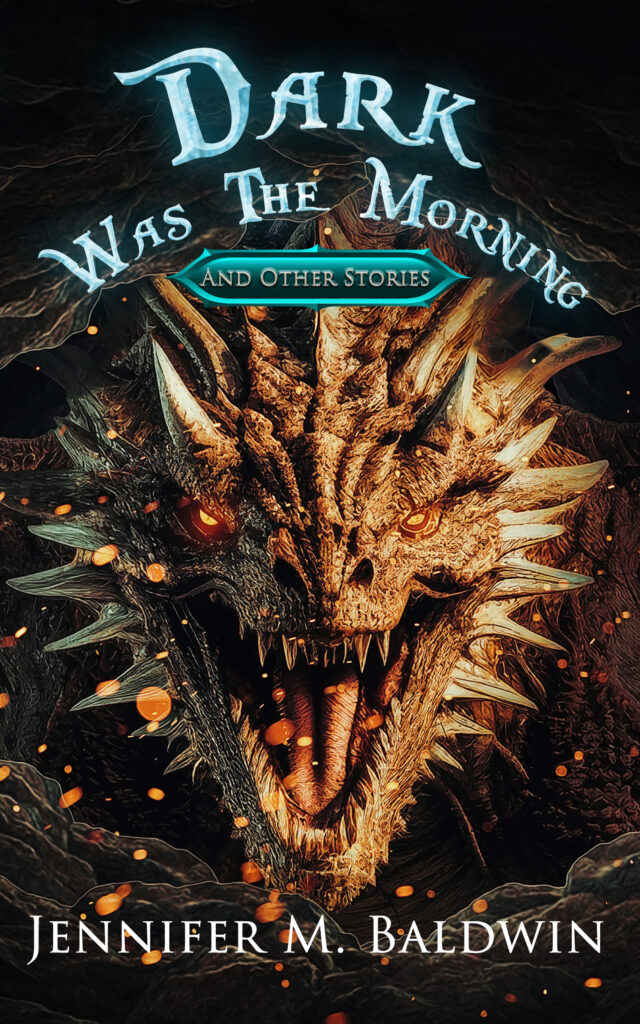
New Goal: Finish a short story set in my magical music academy world: Not yet, but almost! I started a story called “Bronwyn Harper” a little while back and I’m getting close to finishing it. Between this story and Shards, I’ve been writing steadily. I also finished a random short story about a dragon egg and submitted that to Writers of the Future, so I need to remember that I haven’t been idle simply because I haven’t finished one of my big novels.

Publish my short story collection: Yes, I did it!

This was a big goal for me in 2025, and I’m happy to report that I met it. A bright spot for sure. It took me longer than I’d hoped, but the key thing is that I did it.

Finish a novella in my City of Ashes series: Not yet. Maybe never? This was a thing my Creative Writing students challenged me to do, but I’m not loving it. Time will tell.

Blog every day: I am not blogging every day, but I am still blogging. I like that this is a place I can continue to return to. I still aspire to blog every day, but it’s okay if I don’t.

Send out Substack newsletter every two weeks: Not yet, but I’m getting better. I’m prioritizing it a bit more. I’m looking through my notebook each week with an eye toward what can go on the Substack, and I’m loosening up my internal “rules” for what I should write about. The topics and essays are a little more wide-ranging, and I find this suits my personality and writing goals better.

Play more role-playing games with my kids, my husband, family, and friends: This is happening and I couldn’t be happier! I just played a one-on-one session of Caverns of Thracia with my eight-year-old son the other day, and it was glorious. And now that my Dolmenwood stuff has arrived, I’m ready to start up campaigns with family and friends. As a family, we’ve been playing Mausritter, Hero Kids, and DnD 5e.

I’m also playing in a regular Shadowdark game, and I’m running Thracia as an open table at a FLGS.

This has been an unqualified success.

Create some RPG modules for Norse City Limits and Merlin’s Last Magic: Not yet.

Make a “Saturday Morning” zine series and publish an issue every month: Not yet.

Make other zines: Not yet.

Read more books with my kids (Mrs. Frisby and the Rats of NIMH, Half-Magic, James and the Giant Peach, the Hobbit, the Silver Chair, Horse and His Boy, Magician’s Nephew, Last Battle, more Little House books, How to Train Your Dragon series, Harry Potter): I was doing this, and then we stalled, and now I’m ready to make this a priority again.

I think we need to force our kids a bit on these. They are sometimes reluctant to listen to these older books, but we think it’ll be good for them. First up, NIMH and A Horse and His Boy, then a retry with The Hobbit.

Start naalbinding again (finish the hat I started for my son and make another one for my other son): Ugh, not yet. I want to prioritize this. My son’s head will be too big if I don’t finish soon!

Practice my cartooning/comics drawing (for the zines): Hmm… a bit? Not much, though. Need to do more daily drawing.

Start a podcast: This is a new goal, but I have an idea I’m excited about and which I think my readers will really like. New goal for 2026 is to actually record the episodes and maybe even launch.

Write essays, poems, and fiction that will serve as models for my students next school year: Not much, and I’m wondering if I want to keep this as a goal. I’m not saying I never do this, but I don’t think I need to set it as a goal for myself. I can write things as needed and dictated by the students I have each year. But making it a personal goal feels like an unnecessary step. I’ll do the work if I need to as part of my day job; no need to “focus” on it here.

Bonus achievement: The dragon egg story I wrote on a whim and submitted to WotF. I was using a writing prompt, thinking it would just be an exercise, and then it turned into a whole story. Just goes to show that “practice” for writers can turn into real work (as is true for nearly all artists). Who knows if it’s any good, but I had fun writing it.

Inventing the Process

“Part of the work is figuring out how to work.”

(Kevin Nguyen, from Counter Craft interview, April 8, 2025)

I’m abandoning old ways of thinking and doing. For too long I’ve clung to “identities” (think: Plotter versus Discovery Writer) and methods (“Writing into the Dark”) that are gumming up the works of my actual, functioning brain and the way I process and express my ideas.

I’m not abandoning certain aspects of these methods and identities, but I am abandoning the framework that makes me think in these terms. That framework often works as an inner monologue as I sit down to write, telling me how I should be doing things before I’ve actually started doing them.

Inner Monologue: “If I’m a discovery writer, then I shouldn’t ever make any kind of outline before I start writing. If I follow a writing into the dark methodology, then I shouldn’t ever plan ahead before I start writing.”

And also, the inner monologue has some things to say about speed and word count quotas and all the rest: “To be a real writer, I need to hit a certain word count each day/week/month/year. I need to be more disciplined. I need to apply Butt to Chair.”

On the whole, these inner voices DO reflect something important about my process. I do tend to get bored if I’m writing from an outline, so I prefer to discover as I go. I do tend to write by “cycling” instead of burping shitty words onto the page with the promise that I’ll “go back and fix them” later. I hate “revision” in the traditional way we mean it. It’s tedious, I get confused and frustrated, and in the end, I don’t think the writing is any better. So I like to “revise as I go,” i.e.: cycle through the previous sessions words and tweak or change things.

It’s not that I’m abandoning these techniques and methods.

But I need to abandon the thinking behind them. That I must adhere to a “method” at all. It’s almost like I’ve created an ideology for myself and must fit everything into that ideology. That’s what I need to abandon.

I making this a conscious thing because I’ve started to notice that my creative voice often has A LOT to say, a lot to express, but instead of just letting the words fly upon the page, I start my writing sessions by doing my “method.” I follow the cycling procedure like a ritual at church. And sometimes that cycling procedure IS what my voice wants.

But sometimes it isn’t.

Sometimes I have a line or an image that’s sticking in my brain, and I need to write that first. I need to follow that thread. It might connect to what I wrote yesterday, it might not, it might take me some time to see the connection, it might never connect (meaning it might be for a different story).

I am really good at putting words on the page. I really love putting words on the page. I can write in my notebook and fill three pages often in less than twenty minutes. I can write a paragraph or two in minutes. When I stop worrying or don’t “care” if the words are “important,” then I can write at the drop of a hat. No block whatsoever.

So if I’m good at it and love doing it, why is it so hard for me to put words on the page when it’s time to “write my fiction”?

It’s because I’m trying too hard to follow a method, to fit an identity. I’m looking at what works for others and trying on their shoes, almost in the way a child tries on her parent’s shoes and walks around comically with giant clown feet. I can walk, but it’s awkward. It works until it doesn’t, until I trip on the cat’s tail and fall.

Writing is easy for me. It’s only when I say, “Alright, time to stop fiddling around and write that FICTION,” does my hand freeze up. Because now I’m caught in the methods, in the process I’ve prescribed for myself.

But what if each new time I sit to write I acknowledge that it IS a new time, that what worked yesterday might not work today, and that trying to adhere to something that worked yesterday might be more of a fly trap than a way forward?

The only way forward is, well, forward. To do the work that is in front of me at this moment in time, not the work of yesterday or last week. What worked yesterday might not work today. Part of the work is seeing where my Creative Voice wants to go today. But that means letting go of systems or ideologies about how to do the work.

I’m not arguing against discipline. Or methods or procedures. There’s a great section in Bayles and Orland’s Art and Fear where they talk about Chopin and his Mazurkas as the way he gets his work done. Something about the Mazurka as a form allows Chopin to do his work. It’s an entry-point, a doorway that allows him to enter into his work and get things done. So having those doorways is good. I’ve got a few of them (my writer’s notebook and morning pages, for instance), and they often take me into my work. Cycling does too. Sometimes.

But sometimes the morning pages don’t take me into my work. Sometimes the cycling system fails. And what I’ve been trying to do is conform myself to the system in order to create, instead of saying, “Okay, today the system failed. Now what? Well, I want to write this line about a woman jumping down a manhole to chase a giant worm.”

Instead of pushing that woman and her giant worm to the side, maybe I should roll with it. Ride that worm. Who cares if it’s not part of my “normal” process? Who cares if it’s not part of my current work-in-progress? Maybe it will be. I don’t know. But I’ve been trying to tell my Creative Voice, “No, don’t play over there. Play over here. With these toys,” and that’s looking like a pretty destructive thing to do. Creative Voice sulks and doesn’t play at all.

So which is worse, following a random tangent but still getting words written or trying to follow the system and getting nothing written?

And yet, in saying all this to myself, am I just creating another system?

Yes.

Which means, there may be times when I will force myself to cycle and write the next line, even if the heat isn’t in me at the moment, even if I have visions of subterranean worms riding the sewer waves, even then, I will cycle through and push those words out and tell Creative Voice to be patient, it will get fun again.

Because there is no system. There are many systems and none.

There is each new day at the desk, each new embodiment of myself at that desk, each new moment where maybe I’m a bit hungrier today than I was yesterday, or I’d just read something that stuck in my craw last night, or I had a funky dream, or something came out in my morning pages and I like it and I’m gonna follow its thread, or I don’t feel like typing so I’m going to handwrite a few lines of dialogue, or I’m going to skeleton-scene something that just popped into my head even though I’m not sure I’ll use it in the story…

Each new day means figuring out how to work. Yes, there are systems and Mazurkas to help us, but sometimes they don’t help us and we have to figure out something else. Sometimes we don’t have to “figure” at all; we just have to do. The old Bradburian saying about jumping off the cliff and building one’s wings on the way down.

Each day is a new invention of the self and the work and the process. One system, many systems, no system.

Whatever gets the art out.

Word Counts and Critical Voice

I never realized how much my consideration of a project’s word count could invite my critical voice to make an appearance. After all, if I’m writing a novel, don’t I have to make sure it hits a certain word count (ballpark, anyway)? Same for short stories, novellas, etc. How can I write anything without considering word count?

Here’s another case of me not heeding my own advice. I tell students all the time that page counts and word counts are arbitrary when it comes to prose. Teachers tell students to write five hundred words (or a thousand or two-fifty or whatever) not because the word count is intrinsic to the piece of writing, but because of other factors: we don’t have time to read twenty-five eight-thousand-word essays this week, or we want the students to learn brevity, or we simply follow convention by giving students their beloved “How long should this be?” question an answer.

The real answer is, “However long it needs to be.” But students hate that answer. We teachers sometimes hate it too.

If we were printing a magazine or a newspaper, then column length would matter. There’s only so much space on a page.

If we were publishing books, then length would matter too for something pushing against one thousand pages.

But students aren’t usually writing for publication in a print newspaper, and novelists aren’t usually pushing against one thousand pages for their novels.

The answer is, “However long it needs to be.”

And yet here I am, sitting here week after week, scribbling and typing away at my stories, constantly checking the word count to see if it “fits” the prescribed type of story I’m writing. Not genre, not narrative. But: Is it a short story? A novel? A novella? Better make my “short story” the right length. Not too long, not too short. Better make sure my latest novel is between 90k and 100k words. Better work towards a “length,” because how else will I know I’m done?

Idiocy.

Despite what I tell students, I’ve internalized the “How long should it be?” question for my own writing, and it’s opened the door to Critical Voice. Instead of spinning the yarn and letting it go where it may, I’ve decided ahead of time what “type” of story it is, and I’ve been writing to that length and structure.

Who is to say what I’m writing is a short story? Even if I set out with an idea I think will be a short story, what happens if it starts to pick up steam and becomes something more? Am I open to that possibility, or am I stuck in “short story”-mode, trying to fit an oversized foot into a glass slipper that just won’t hold it?

For Norse City Limits, I decided that it needed to be a “proper” length. Fantasy, after all, is a genre that welcomes the longer book. Readers expect a hefty tome.

But what if my story isn’t fit for hefty-tome-dom? What if NCL needs to be 60k or 70? What if it needs to be ultra-hefty? 300k? Or more?

I am not trusting my Creative Voice here. I am working towards something arbitrary instead of something that comes intrinsically out of the story itself.

Bad, bad, bad, bad, bad.

I never realized how much the “publishing” side of things was intruding on my creative process. I thought that since I always write what I want and never to “market,” that I was immune from the business side interfering with Creative Voice.

Gah! I was so wrong!

Sneaky, that Critical Voice.

If I were writing for a print newspaper, things would be different. If I were writing a sonnet, obviously, the form demands a certain length.

But I’m writing fiction and nonfiction on my blog and as an indie publisher. Length doesn’t matter.

This is wildly freeing. Today, as I worked on a “short story,” I realized that there was no reason it had to be bound by the term “short story.” I mean, maybe it will end up being a short story. Chances are it will. There are only a few characters and one setting. It’s basically the story of a brief affair. I don’t think it will be more than a short narrative.

But maybe I’m wrong. Maybe this is only the first chapter of a longer story. Maybe this little May-December romance will become something larger in scope.

That’s not for me to decide at the moment. All I have to decide is what the next sentence will be. And the next. Until the story finds its ending.

That’s the key: The story must find its own ending.

Not a word count or publishing consideration. Those don’t determine the ending. That’s Critical Voice thinking.

What does the story need? Where will it end?

That’s Creative Voice talking. I’m just along for the ride.

I finally realized today that I’d been trying to backseat drive, trying to route the way only to discover that there is no fixed destination. Not yet, anyway. The route, the journey, my Creative Voice will decide the destination, not me.

And not my word counts.

Thoughts on The Motern Method

I liked it. Well-worth reading and owning.

However, if anyone has spent any time at all reading Heinlein’s Rules or exploring corners of the internet where these Rules are being lived out, a lot of the concepts in The Motern Method will sound familiar.

Which doesn’t mean it’s not worth reading. IT IS.

But it wasn’t particularly revolutionary for me. Parts of it reminded me of Make Art, Make Money: Lessons from Jim Henson on Fueling Your Creative Career. Parts of it reminded me of Ray Bradbury’s long-standing advice on quantity over quality in one’s art-making. And parts of it reminded me of Heinlein’s Rules.

One thing it also reminded me of is my previous desire to be an independent filmmaker. If The Motern Method was anything for me, it was a reminder that I once wanted to make movies and felt like I didn’t have the resources, and that maybe I need to let go of such thinking and try to make a movie no matter the lack of money or equipment.

I’m not saying I’m going to start making independent films. But… maybe?

The other thing I like about the book is that it collects a lot of advice into one place. Sure, there are Heinlein’s Rules and the books and authors I referenced above, but when I need a quick pep talk, The Motern Method is right there, with all the stuff.

For instance, I got a rejection the other day from a short story market. And yeah, yeah, rejections are part of the deal, right? I’ve had many rejections before, so you’d think I’d brush it off and no big thing.

But I was bummed. In a funk.

And that rejection was followed by another rejection (different story, different market). So again, you’d think, “But that’s great! You’ve got two stories out for submission and even with the rejections, all you need to do is send them out to two more magazines and keep going!”

And that’s exactly the right advice, but my brain doesn’t always operate on logic. My brain sometimes spirals into depths of self-doubt and loathing that are like the black pits of Tartarus, just roiling under the surface waiting to bubble up.

I know rejections are part of the gig, and I know all I need to do is send the stories out again. But knowing and believing are two different things.

Enter The Motern Method.

I remembered that Farley had a few chapters on rejections and getting your work out into the world (again, very Heinlein-esque), so I flipped to those pages and started reading.

It was basically a pep talk, and it worked. My brain stopped its death-spiral, and I felt renewed. Getting my work out into the world is what matters. Getting your work out into the world is what matters. Can’t let rejections stop that. Gotta keep going.

Sure, I could have gone online and googled Heinlein’s Rules again, or tracked down similar publishing advice, but having Farley’s book right at hand, its minimalist, indie-punk black and white cover reminding me that artists can work outside the mainstream system, made it easier to read what I needed to read.

I love the book’s aesthetic. No author is mentioned anywhere but on the spine. No introduction, no table of contents. The book just starts, each section indicated by bold-font titles, and then it ends, with Farley narrating his creative journey, explaining how the Motern Method was developed and how it helped him write the book.

Some sections are ones I quibble with a bit. “Read the comments. Read the reviews”? Maybe for others, but for me, this is DEATH. Both good comments and bad, good reviews and bad, tend to hurt my Creative Voice. It doesn’t mean I’m not an idiot who sometimes reads the reviews, but I always hate myself afterward.

Farley’s larger point — that reading the reviews will toughen you up, show you that taste is relative and not to worry if people don’t “get” your work — isn’t a bad one, but I know for my own ego, reviews can get inside like brain worms and infect my process.

But overall, the book is a rallying cry, a manifesto.

And it is very punk. Which I dig.

I’ll be keeping The Motern Method on my writing desk. When I’m stuck, when I’m down, when I need a kick in the pants, it will be my go-to.

A New Spirit

It feels like spring here in Michigan. For two days, at least, we’ve had a thaw: snow melting into great running rivulets along the sides of roads, puddles everywhere, blue sky and birdsong. I’ve also started a new notebook, having finished my previous one this past weekend.

Upon starting a new notebook (spiral-bound, flimsy cardboard cover, the kind you can get at any CVS or Kroger), I like to enliven it with a “guardian spirit” on the first page (hat tip: Austin Kleon for the “guardian spirit” concept).

For this new notebook — as February ends and spring begins (eventually) — I want someone who embodies the kind of disposition I’m hoping to cultivate this season. Ice is cracking, snow is melting.

I’ve decided on C.S. Lewis, but not merely because of the obvious allusion to his most famous children’s book about the end of winter.

My children and I just recently finished the audiobook of The Silver Chair (topnotch performance by Jeremy Northam, by the way).

I often can’t decide which Narnia book is my favorite — it’s a three-way tie between Chair, Dawn Treader, and Magician’s Nephew — but since The Silver Chair is freshest in my memory, it’s my favorite for now. It’s the perfect “knightly quest” narrative. Jill and Eustace are sent on a great mission to rescue the king’s son, they have signs and directions to follow that they often bungle, but nevertheless, they continue to seek the fulfillment of the charge placed before them, and in the course of their journey, they face giants, and strange magic, and monsters, and wondrous creatures. Also, there are talking owls. I am a sucker for talking owls.

And Puddleglum. Puddleglum and Reepicheep. Best Narnians by a country mile. Northam’s voice for Puddleglum is perfection.

I also finished John Hendrix’s fantastic graphic novel about Lewis and Tolkien called The Mythmakers (another Kleon recommendation and also utterly topnotch).

At some point in the future I’d like to write a bit more about The Mythmakers because it was completely wonderful, but for now I’ll say that the portrait Hendrix paints of both men made me fall in love with their lives and their journey all over again.

(I say “all over again” because I was already a huge Lewis and Tolkien nerd, but Hendrix’s comic has reinvigorated and reoriented that passion… I’m even thinking of choosing new books for my British Lit class next year due to the ideas Hendrix’s graphic novel ignited.)

Lewis, myths, stories, adventure, the creative process: all of it hits where I’m at right now. I’m not exactly an Oxford don, but as a high school English teacher, I have some affinity for professors like Lewis and Tolkien: teachers who also cared deeply about their work as writers. I’m much more Tolkien-esque in my procrastination and slow production, but I aspire to be more Lewis-ish. I admire prolific artists, and Lewis was decidedly prolific.

He also was a voracious reader and loved many books and genres. I’d like to think that I read a lot, but I also want inspiration to keep reading more (and more widely). I want to reclaim myself as a Reader, capital-R, and even more particularly as a BOOK reader. There are many wonderful blog posts, articles, essays, and sundry on the internet, but I want books. Books to read. Books to spend hours upon hours lost inside. I want to read books the way Bilbo wants to see mountains.

Tolkien was famously (infamously?) critical of Lewis’s habit of throwing everything-and-the-kitchen-sink into his Narnia stories, but I’m much more a Lewis than a Tolkien when it comes to my own storytelling and world-building. Lewis’s fantasy stories are very “Arthurian” in that sense. Everything is up for grabs. The mythos can contain multitudes.

(Anyone familiar with the breadth of Arthurian stories from the Middle Ages and beyond will know that there’s nothing the Arthurian mythos can’t contain, or practically nothing. Lewis, as a medievalist and lover of Arthuriana, was always much more comfortable weaving different traditions and legends together; whereas Tolkien, though also a medievalist, was less enamored of the King Arthur legends and less inclined to the hodgepodgey quality of those stories.)

I can already feel the pull of my library books, and already the desire to take solitary long walks through the countryside, and at last the desire for tea (or beer), good conversation, and the sharing of stories.

Experiments in Applying Butt to Chair

Wrote about 740 words in an hour. Handwritten. (Sometimes I handwrite, sometimes I type. Switching back and forth helps jog my Creative Voice. I let it decide which to do at any given moment.)

Not my highest word count in an hour, but I did have a brief stretch in the story where I haggled over word choice and phrasing. I try to not get bogged down in such things, but there are times when I really have a way I want something to sound, and my first few attempts aren’t quite getting the rhythm. So, I try out a few different options: moving words around, switching out phrases, writing sentences, scratching them out, then writing new ones, etc.

I told myself I wasn’t moving from my chair for one hour, and lo and behold, it worked. I sat in my chair for one hour and wrote a decent chunk of words. Now I am writing this blog post, so more words abound.

Today was a day off from teaching, so this one-hour, uninterrupted writing time is a bit of an experiment. I usually rush to write a few hundred words in the morning before work, but this is the first time in several weeks where I’ve had a quiet afternoon (no children at home), and I’ve been able to write. I wanted to see if I had the focus and stamina to sit and write for an hour without interruption, and the answer is yes. I can do it. I can probably take a ten-minute walking break and do it again for another hour. I can foresee myself doing this for three or four hours in a day, if I had such chunks of time. I might even try it later this afternoon, when the kids are home from school, to see if I can do it with a little bit of noise and distraction hovering around.

I can see myself doing this day in and day out. A day spent writing.

I can’t say I’ve cracked “writer’s block” or anything (hahaha, far from it!), but I will say that I’ve gotten better and better at finding strategies and methods to be more focused and confident. A few years ago, sitting and writing for two or three hours sounded good in theory, but I had a terrible time actually doing it. I would jump on the internet for “just a minute” and end up there for hours. I would tell myself to go down to my computer and write, but then a million other things would suddenly become extremely urgent, and I’d do all those other things instead of the one thing I told myself I wanted to do.

A few years ago, I worried that I simply wasn’t cut out to write professionally because I didn’t have the discipline or work ethic to make it happen. When I did have hours upon hours of time on my hands, I squandered it.

Today, in this butt-in-chair experiment, I’ve seen that I AM capable of blocking time for writing, doing the writing, and getting the writing done. And wanting to do more writing. Keeping the chain going.

I definitely need to replicate this experiment many more times before I can confidently say my work ethic has improved, but today was a good start. Today showed me I can do it if I want to.

« Older posts Newer posts »

© 2026 Jennifer M. Baldwin

Theme by Anders NorenUp ↑